
Medical manufacturing refers to the design, production, assembly, and quality control of products used in healthcare settings. This includes everything from surgical instruments and implantable devices to diagnostic equipment and single-use consumables.
Unlike many other industries, medical manufacturing operates under strict regulatory requirements, advanced material standards, and zero-tolerance quality expectations. Patient safety, product reliability, and compliance are at the core of every process.
What Does Medical Manufacturing Include?
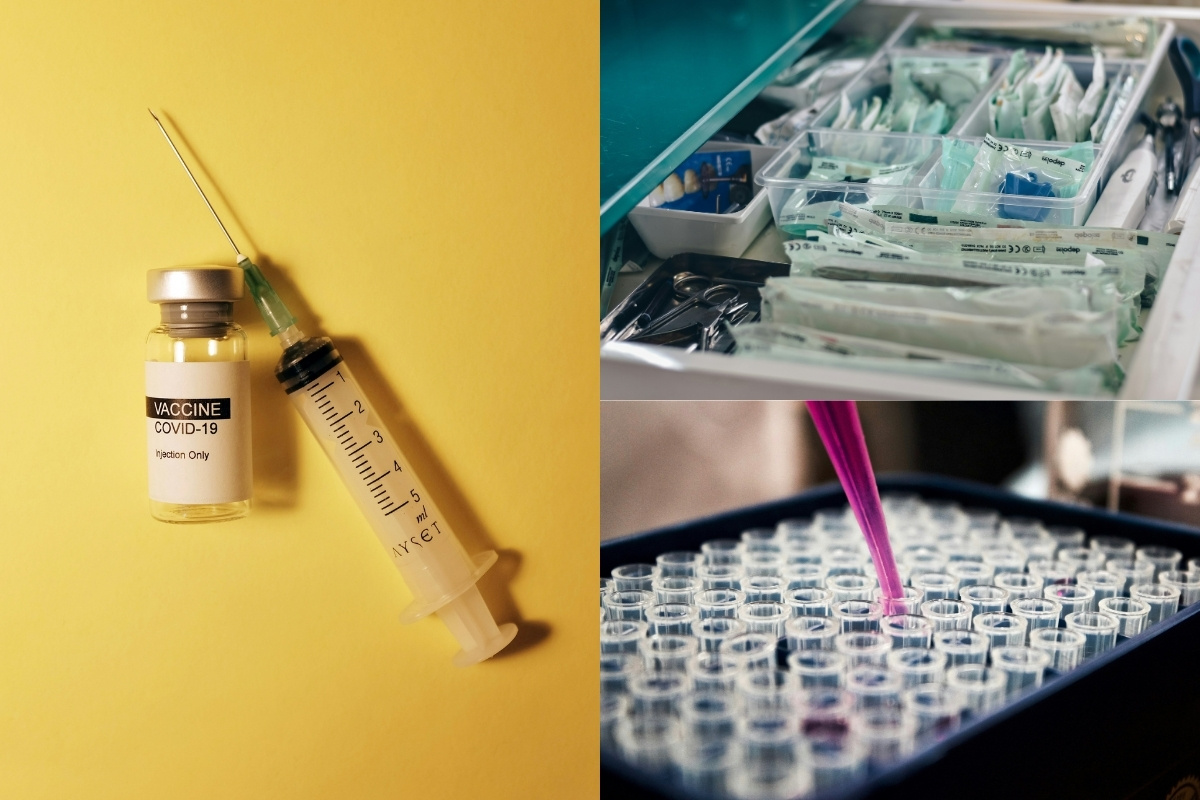
Medical manufacturing spans multiple product categories:
1. Medical Devices
- Surgical tools (scalpels, forceps, clamps)
- Diagnostic equipment (MRI machines, ultrasound devices)
- Monitoring systems (ECG machines, blood pressure monitors)
- Disposable supplies (syringes, catheters, IV sets)
2. Implantable Devices
- Orthopedic implants (hip and knee replacements)
- Dental implants
- Pacemakers
- Stents
3. Components & Subassemblies
- Precision machined parts
- Injection-molded plastic housings
- Electronic circuit boards
- Tubing and fluid control systems
4. Pharmaceutical & Biotech Manufacturing
Although distinct, pharmaceutical production often overlaps with medical manufacturing through sterile environments, packaging systems, and regulatory compliance standards.
The Medical Manufacturing Process
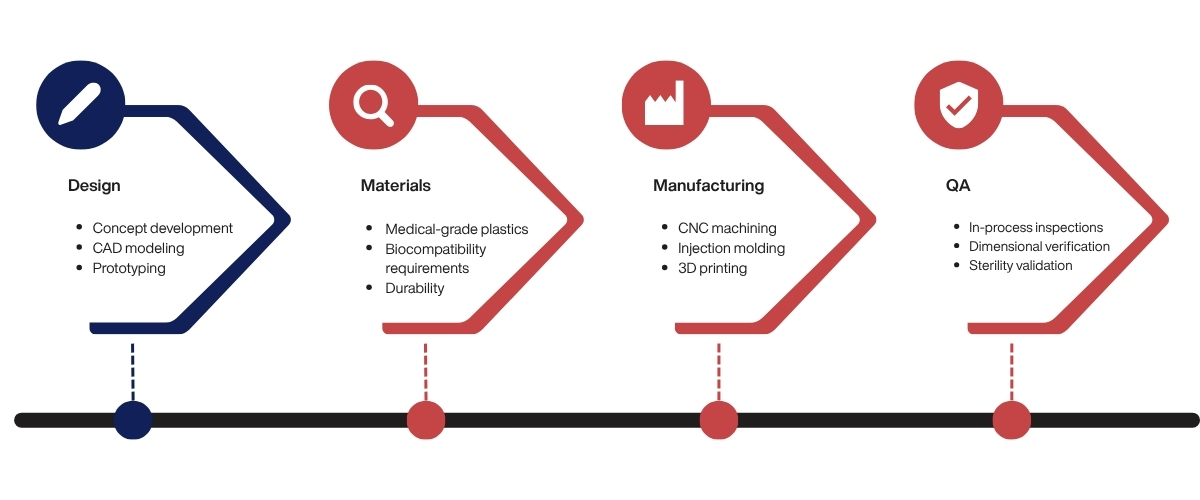
The process typically involves multiple stages, each governed by strict documentation and validation procedures.
1. Product Design & Engineering
- Concept development
- CAD modeling
- Prototyping
- Design verification and validation (V&V)
Design must comply with regulatory frameworks such as:
- FDA 21 CFR Part 820 (U.S.)
- ISO 13485 quality management systems
2. Material Selection
Common materials include:
- Medical-grade stainless steel
- Titanium (for implants)
- Medical-grade plastics (PEEK, polycarbonate)
- Silicone and elastomers
Materials must be biocompatible, sterilizable, and durable.
3. Manufacturing Techniques
- CNC Machining: Used for precision components like implants and surgical instruments.
- Injection Molding: Ideal for high-volume plastic parts such as syringes and housings.
- Additive Manufacturing (3D Printing): Enables patient-specific implants and rapid prototyping.
- Cleanroom Assembly: Critical for sterile and implantable products.
Regulatory Standards in Medical Manufacturing

Medical manufacturing is heavily regulated to ensure patient safety.
Key Regulatory Bodies:
- FDA (United States)
- European Medicines Agency (EMA)
- ISO (International Organization for Standardization)
Important Standards:
- ISO 13485 – Medical device quality management
- ISO 14971 – Risk management
- GMP (Good Manufacturing Practices)
Manufacturers must maintain:
- Full traceability of materials
- Documented quality systems
- Risk management files
- Post-market surveillance systems
Why Quality Control Is Critical
In medical manufacturing, defects can lead to serious health risks. Therefore, manufacturers implement:
- In-process inspections
- Automated optical inspection (AOI)
- Sterility validation
- Mechanical stress testing
- Biocompatibility testing
Quality assurance ensures products meet both regulatory standards and clinical performance expectations.
Emerging Trends in Medical Manufacturing
1. Automation & Robotics
Robotic assembly improves precision and reduces contamination risks.
2. Smart Manufacturing (Industry 4.0)
IoT sensors and real-time monitoring enhance traceability and predictive maintenance.
3. Custom & Patient-Specific Devices
3D printing allows tailored implants and prosthetics.
4. Sustainable Manufacturing
Focus on recyclable materials and energy-efficient production processes.
Medical manufacturing requires a higher level of compliance, documentation, and quality validation compared to most other sectors.
Who Works in Medical Manufacturing?
Key roles include:
- Biomedical engineers
- Manufacturing engineers
- Quality assurance specialists
- Regulatory affairs professionals
- Cleanroom technicians
- Supply chain specialists
This industry blends engineering precision with healthcare responsibility.
Why Medical Manufacturing Matters
Medical manufacturing plays a critical role in:
- Improving patient outcomes
- Enabling minimally invasive procedures
- Supporting life-saving technologies
- Advancing global healthcare access
Without rigorous manufacturing processes, even the most innovative medical technologies could not safely reach patients.
Medical manufacturing is a specialized, highly regulated sector focused on producing safe, reliable, and compliant healthcare products. It combines advanced engineering, strict quality control, and regulatory expertise to ensure that every device used in patient care meets the highest standards.
As technology advances, medical manufacturing continues to evolve—embracing automation, digitalization, and customization to meet the growing demands of modern healthcare.
Why Partner with Texas Injection Molding for Medical Projects?

Located in Houston—home to the world-renowned Texas Medical Center—we understand the urgency and precision required by the healthcare industry. We offer:
- Engineering Excellence: Decades of experience in engineering-grade resins.
- Regional Proximity: Fast, face-to-face collaboration for Texas-based medical startups and established OEMs.
- Risk Mitigation: Our robust quality systems reduce the risk of recalls and production delays.
Start Your Medical Manufacturing Project Today
Navigating the complexities of medical-grade production requires a partner who understands the stakes.
Call us at 281-489-4292 or visit our Contact Page to discuss your medical device design and how we can support your path to market.