A practical guide to ethylene vinyl acetate (EVA), its properties, common applications, and material selection considerations for injection molded parts.
Ethylene vinyl acetate, commonly called EVA, is a flexible polymer used in products ranging from shoe midsoles and protective padding to flexible molded components. Its appeal comes from a combination of softness, low-temperature flexibility, and the lightweight cushioning available in foamed formulations.
However, EVA is not one uniform material. Vinyl acetate content, additives, foam density, and processing method all influence how a finished part performs. This guide explains where EVA fits and what engineers and buyers should evaluate before specifying it.
What Is Ethylene Vinyl Acetate (EVA)?
EVA is a copolymer made from ethylene and vinyl acetate. The ethylene component provides polyethylene-like characteristics, while vinyl acetate changes the material’s flexibility, softness, and clarity.
In general, increasing vinyl acetate content makes EVA softer and more flexible. Lower-vinyl-acetate grades behave more like flexible polyethylene. The final properties also depend on the resin grade and formulation.
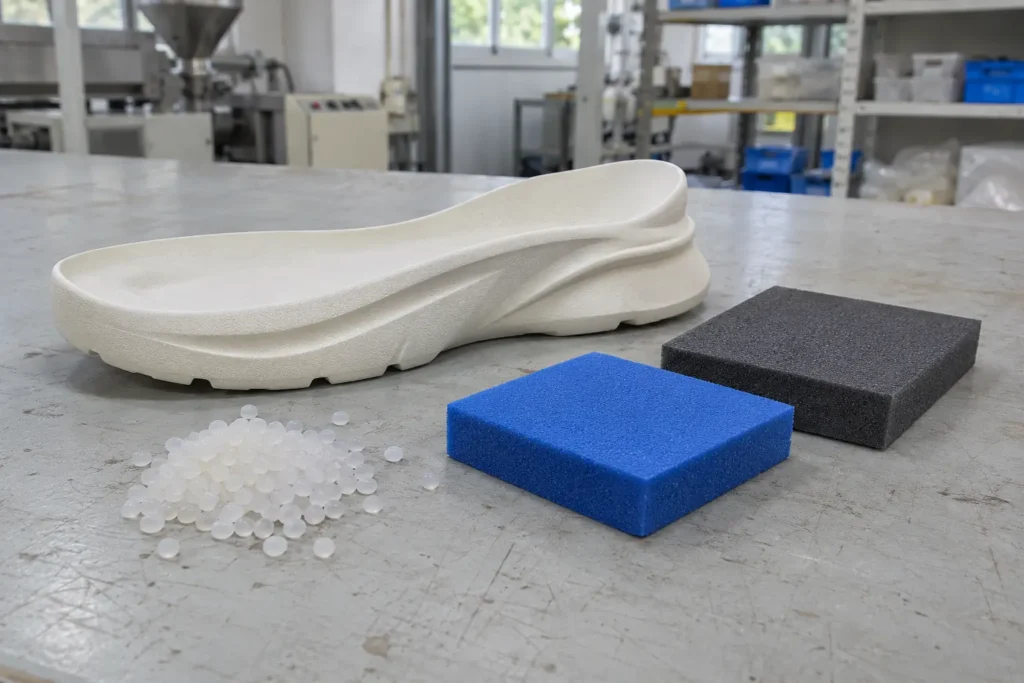
EVA can be processed into solid parts or expanded into foam. Solid EVA is used where flexibility and toughness matter, while foamed EVA is commonly selected for cushioning and reduced weight. The base resin is thermoplastic, although some finished EVA foams are crosslinked during manufacturing.
Key Material Selection Factor
Specify whether your application requires solid EVA or EVA foam. Vinyl acetate content influences softness, but foam density and crosslinking also affect cushioning, recovery, and processing requirements.
Properties of EVA
The following characteristics describe the material family rather than a guaranteed specification. Confirm performance using the selected grade’s technical data and testing under the intended service conditions.
| Property | Typical Characteristic | Design Consideration |
|---|---|---|
| Flexibility | Flexible, with softness varying by grade | Higher vinyl acetate content generally increases flexibility and reduces hardness. |
| Cushioning | Lightweight shock absorption in foamed formulations | Evaluate foam density, compression behavior, and recovery after repeated loading. |
| Low-temperature performance | Good flexibility and toughness in suitable grades | Validate impact and flexing performance at the lowest expected service temperature. |
| Clarity and appearance | Good clarity and gloss in some solid grades | Foaming, pigments, fillers, and part thickness affect the finished appearance. |
| Chemical resistance | Depends on the formulation and exposure | Check compatibility with specific fluids, cleaners, and chemicals. |
| Heat resistance | Limited for sustained elevated-temperature use | Review softening behavior and deformation under load for the selected grade. |
| Cost | Often economical for flexible or cushioning products | Compare total part cost, including additives, tooling, processing, and durability requirements. |
For more detail on how vinyl acetate content affects molding behavior, see the Celanese EVA plastics molding guide.
Advantages of EVA
- Softness and flexibility: Suitable grades provide a pliable feel for flexible components and consumer products.
- Lightweight cushioning: Foamed EVA can absorb impact without adding the weight of a solid component.
- Low-temperature toughness: EVA can retain useful flexibility in cold environments, depending on the grade and conditions.
- Appearance options: Solid grades can offer clarity, gloss, and a range of colors.
- Formulation versatility: EVA is used in molded products, films, and hot-melt adhesive formulations, although these applications require different grades.
Limitations of EVA
EVA’s softness can be a disadvantage when a component must carry a sustained load, hold tight dimensions, or operate near a heat source.
- Limited heat resistance: Softening and deformation can restrict use at elevated temperatures.
- Low structural stiffness: Flexible EVA grades are generally unsuitable for rigid, load-bearing components.
- Compression and durability requirements: Cushioning products should be tested for permanent deformation and performance after repeated use.
- Outdoor exposure: UV resistance and weathering performance depend on the formulation and stabilization package.
- Handling and release: Some softer grades can be tacky, making material handling and part ejection more demanding.
What Products Are Made from EVA?
EVA appears in both foam and solid products. These examples span several manufacturing processes; they are not all produced by conventional injection molding.
| Industry | Common EVA Applications | Material Consideration |
|---|---|---|
| Footwear | Foam midsoles, insoles, and sandals | Balance cushioning, weight, compression recovery, and wear requirements. |
| Sports and recreation | Protective padding, grips, and foam components | Match hardness and impact absorption to the intended use. |
| Consumer products | Flexible cases, soft components, and toys | Review surface feel, appearance, durability, and applicable product requirements. |
| Medical products | Selected flexible tubing and soft components | Use grades qualified for the specific contact conditions and sterilization method. |
| Packaging | Protective foam inserts and cushioning | Evaluate protection, fit, density, and repeated compression. |
EVA in Injection Molding
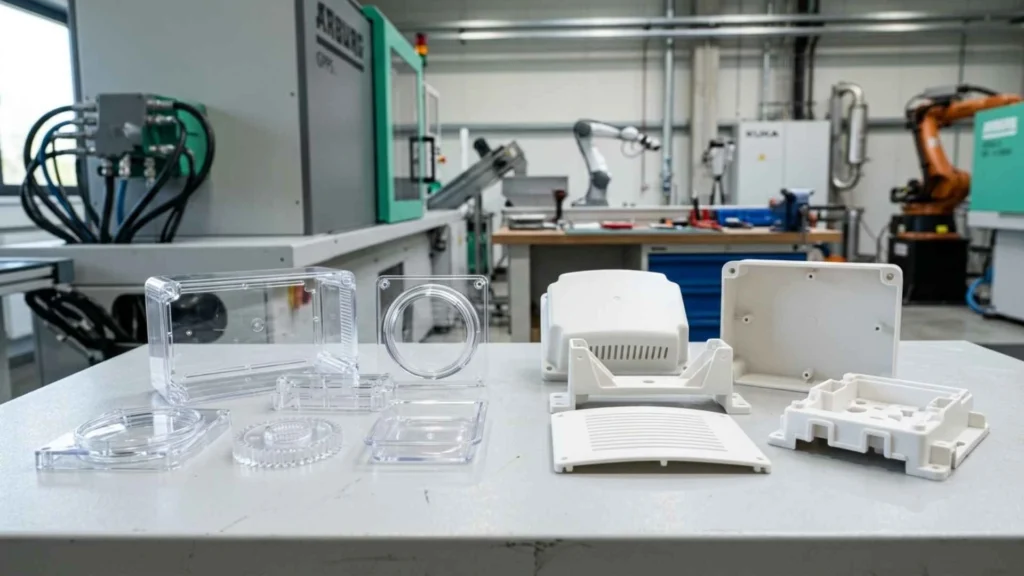
Suitable EVA grades can be injection molded into flexible solid parts. Foamed EVA products require a formulation and process designed for expansion, and some involve crosslinking. Those requirements should be established before tooling and equipment are selected.
Important considerations include:
- Resin selection: Choose a molding grade with the required hardness, flow behavior, and end-use properties.
- Tooling and ejection: Account for flexible parts, surface tack, shrinkage, and distortion during removal.
- Process control: Follow the supplier’s temperature and handling recommendations to avoid material degradation.
- Foam development: Validate expansion, density, dimensions, and cushioning using the intended compound and production process.
If abrasion resistance, tear strength, or mechanical durability is a priority, compare EVA with suitable thermoplastic elastomer (TPE) grades, including thermoplastic polyurethane (TPU). TPE is a broad material category, so the comparison should use specific grades rather than assume all TPEs perform alike.
Frequently Asked Questions
Is EVA a rubber or a plastic?
EVA is a plastic copolymer that can have a soft, rubber-like feel. The base resin is thermoplastic. Some EVA foam products are crosslinked during manufacturing, which changes how the finished material responds to reheating.
Why is EVA used in shoe soles?
Foamed EVA combines low weight, flexibility, and cushioning, making it common in shoe midsoles and insoles. The formulation and foam structure determine its comfort, recovery, and long-term performance.
How does vinyl acetate content affect EVA?
Increasing vinyl acetate content generally makes EVA softer, more flexible, and clearer, while reducing hardness. It also changes thermal behavior, so greater softness should be evaluated alongside service-temperature requirements.
What is the difference between EVA and TPE?
EVA is a specific copolymer family, while TPE describes several families of thermoplastic elastomers. EVA is often considered for economical foam cushioning. Some TPEs, particularly TPU grades, may offer better abrasion resistance and mechanical durability. Compare grades against the part’s actual requirements.
Choosing the Right Material for Your Part
EVA can be a practical choice when flexibility, cushioning, and weight matter more than structural stiffness or high-temperature performance. Start by defining whether the part must be solid or foamed, then evaluate hardness, compression recovery, environmental exposure, appearance, and cost.
Before committing to tooling, confirm the resin grade and manufacturing process through a design for manufacturability (DFM) review. Testing representative parts under actual operating conditions helps establish whether EVA or another flexible material is the better fit.