Material properties, injection molding considerations, and applications for Delrin — one of the most dimensionally stable engineering plastics.
Delrin is DuPont’s trade name for acetal homopolymer (polyoxymethylene, POM) — a semi-crystalline engineering thermoplastic that delivers exceptional dimensional stability, a naturally low coefficient of friction, high surface hardness, and excellent fatigue and impact resistance. It is the material of choice when a plastic product or precision part must behave like a precision-machined component: holding tight tolerances, wearing predictably, and maintaining its dimensions across temperature and humidity conditions that would cause nylon or ABS to drift.
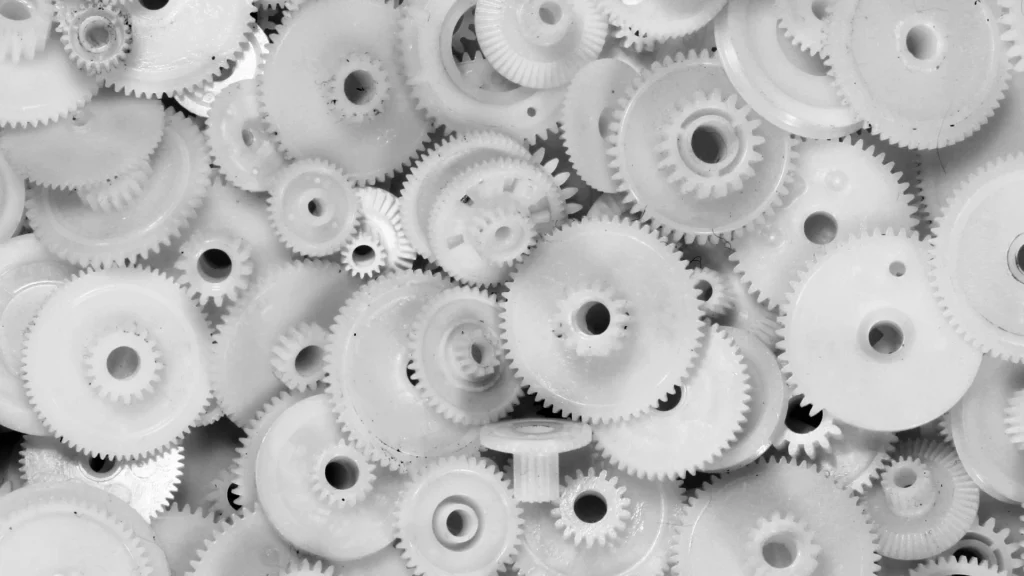
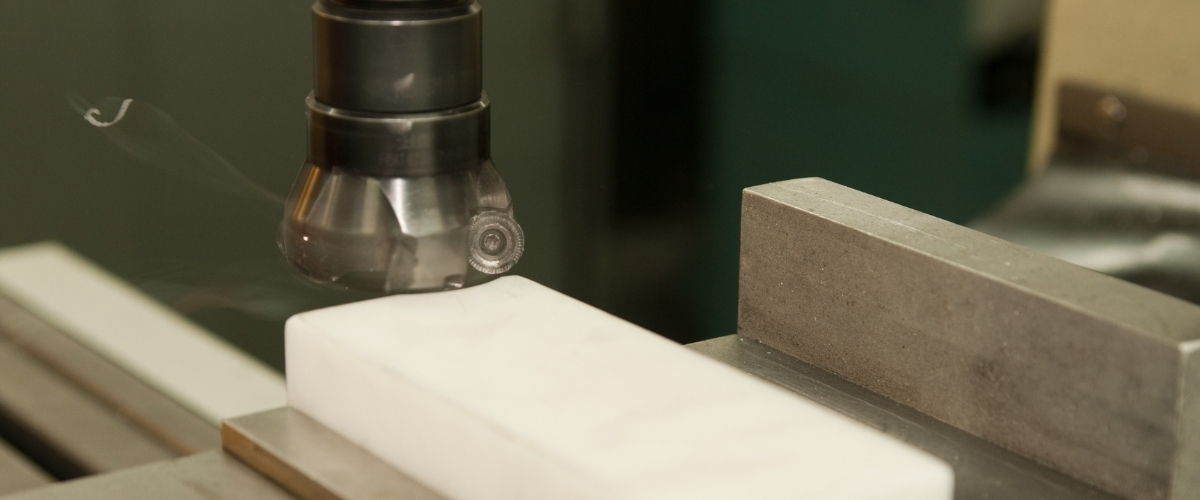
Delrin is widely used in the automotive industry, electrical engineering, and industrial manufacturing for gears, valves, bushings, actuators, precision housings, and any mechanical component where dimensional predictability and low-friction sliding contact are required. Whether produced via CNC machining or injection molding, Delrin components help engineers build long-lasting assemblies.
Key Properties of Delrin (POM Homopolymer)
| Dimensional stability | Low moisture absorption (<0.25% equilibrium) and tight mold shrinkage (1.8–2.2%) give Delrin the best dimensional predictability of the common engineering plastics. |
| Wear and friction | Naturally low coefficient of friction against metals and self-mating surfaces — gears and bearings run without added lubrication in most applications. |
| Tensile strength | Delrin offers high stiffness and tensile strength with approximately 10,000 psi — higher than nylon PA 6/6 in the dry state and far less affected by moisture. |
| Fatigue resistance | Outstanding impact resistance to repeated cyclical loading — preferred over nylon for snap fits and living hinges under repeated deflection. |
| Chemical resistance | Resistant to hydrocarbons, alcohols, oils, and most fuels. Attacked by strong acids and oxidizing agents — avoid acid environments. |
| Temperature range | Useful service range from -40°C to 90°C continuous; short-term peak to 120°C. Above 90°C, long-term mechanical properties decline. |
| Color | Natural white or ivory and black. Delrin has more limited color options than ABS or polycarbonate. |
Delrin vs. Nylon: Choosing Between Them
Delrin and nylon are the two most common engineering plastics for wear and structural applications, and they are frequently compared directly:
| Moisture absorption | Delrin: <0.25% — minimal dimensional change in water or humid environments. Nylon: 1.5–3% — significant dimensional and property change with water absorption. |
| Strength when dry | Delrin: Higher tensile and compressive strength at room temperature. |
| Strength in humid conditions | Nylon: Maintains strength better when conditioned — absorbed moisture acts as a plasticizer that improves impact resistance. |
| Fatigue resistance | Delrin: Better for repeated cyclical loading and snap fits. |
| Wear resistance | Both materials perform well. Delrin runs better against metal, while nylon runs better against itself. |
| Chemical resistance | Delrin: Better against fuels and hydrocarbons. Nylon: Better in alkaline environments. |
| Cost | Nylon: Generally has a lower cost per pound than Delrin homopolymer. |
Common Material Selection Error
The most common decision error is specifying nylon when dimensional stability in humid conditions or water exposure is critical. A nylon bearing housing that swells 1.5% in a wet environment can create interference with its mating metal shaft. Delrin’s sub-0.25% moisture uptake helps maintain the designed clearance across changing service conditions.
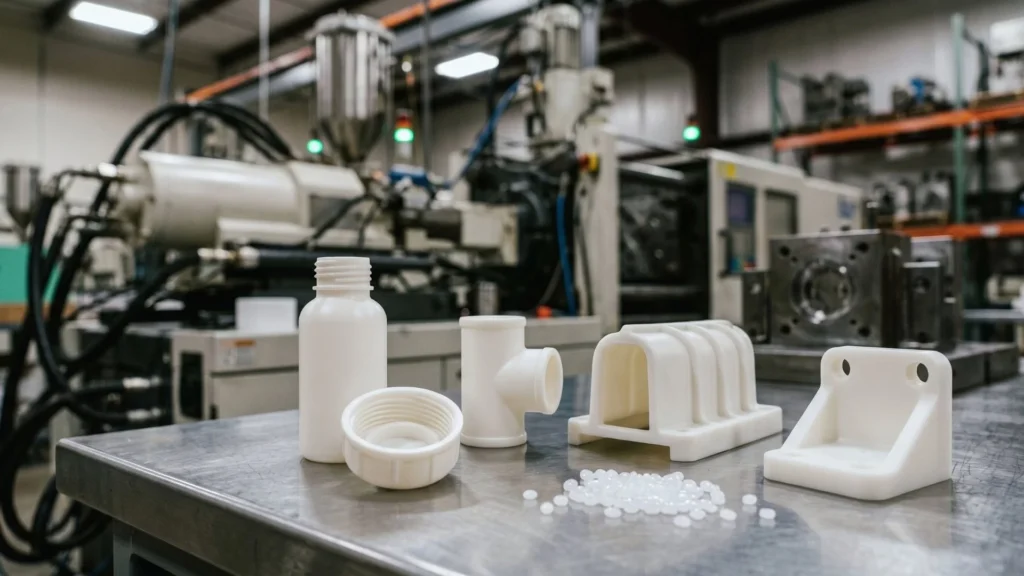
Injection Molding Delrin: Key Considerations
When you need to produce high-volume Delrin parts, strict process control is required:
Mold Temperature
Delrin requires high mold temperatures of 60–90°C to achieve the degree of crystallinity that delivers its rated mechanical properties, high strength, and structural stiffness. Cold molds produce parts with lower crystallinity, reduced impact strength, and greater long-term dimensional drift. Elevated mold temperature is not optional for precision applications.
Formaldehyde Off-Gassing
POM decomposes at elevated temperatures, releasing formaldehyde gas. Processing temperatures must be controlled carefully — barrel temperature should not exceed 230°C, and residence time in the barrel should be minimized. Molds must be adequately vented to help remove formaldehyde vapor during injection.
Gate and Runner Design
Delrin has a relatively low melt viscosity and fills molds readily for complex product designs. Gates can be smaller than those required for ABS or polycarbonate, but the low viscosity also means the mold must be well-vented. Restriction gates, including pin and submarine gates, work well. Avoid large, slow-filling sprue gate configurations that increase residence time.
Common Applications for Delrin Parts
- Precision gears and rack-and-pinion assemblies where dimensional stability under load matters
- Bushings and bearings in applications requiring low friction without lubrication
- Valve bodies, check valves, and fluid-control components in fuel and oil systems
- Actuator housings and precision cams in medical devices and instrumentation
- Snap fits, living hinges, and closure mechanisms requiring fatigue resistance under repeated cycling
- Fasteners, clips, and threaded components where thread precision must be maintained over time
Frequently Asked Questions
Is Delrin the same as acetal?
Delrin is DuPont’s trade name for acetal homopolymer (POM-H). Acetal copolymer (POM-C), sold under trade names including Celcon and Hostaform, is chemically similar but has slightly lower mechanical properties, such as stiffness and high strength, while offering improved chemical resistance to strong alkalis. Both materials are processed similarly in injection molding and CNC machining; they are often interchangeable for many applications.
Can Delrin be used for food-contact applications?
FDA-compliant grades of Delrin (POM) are available and widely used in food and beverage processing equipment, water valves, and dispensing components. If your product requires direct contact with food or drinking water, verify that the specific grade carries the appropriate FDA compliance documentation for direct food contact.
Why does Delrin have better dimensional stability than nylon?
Nylon is hygroscopic and absorbs water and moisture from the environment, causing the polymer chains to swell and the part to grow dimensionally by 0.5–1.5%, depending on the grade and humidity. Delrin absorbs less than 0.25% moisture at equilibrium, so its dimensions change very little between a dry warehouse and a humid production environment which, for instance, helps prevent assembly failures in demanding automotive and electrical applications.