
Mold Makers, Tool and Die Craftsmen
Experienced mold makers and tooling professionals supporting injection mold design, construction, maintenance, and production from our Houston facility.
Experienced Toolmakers Supporting Production
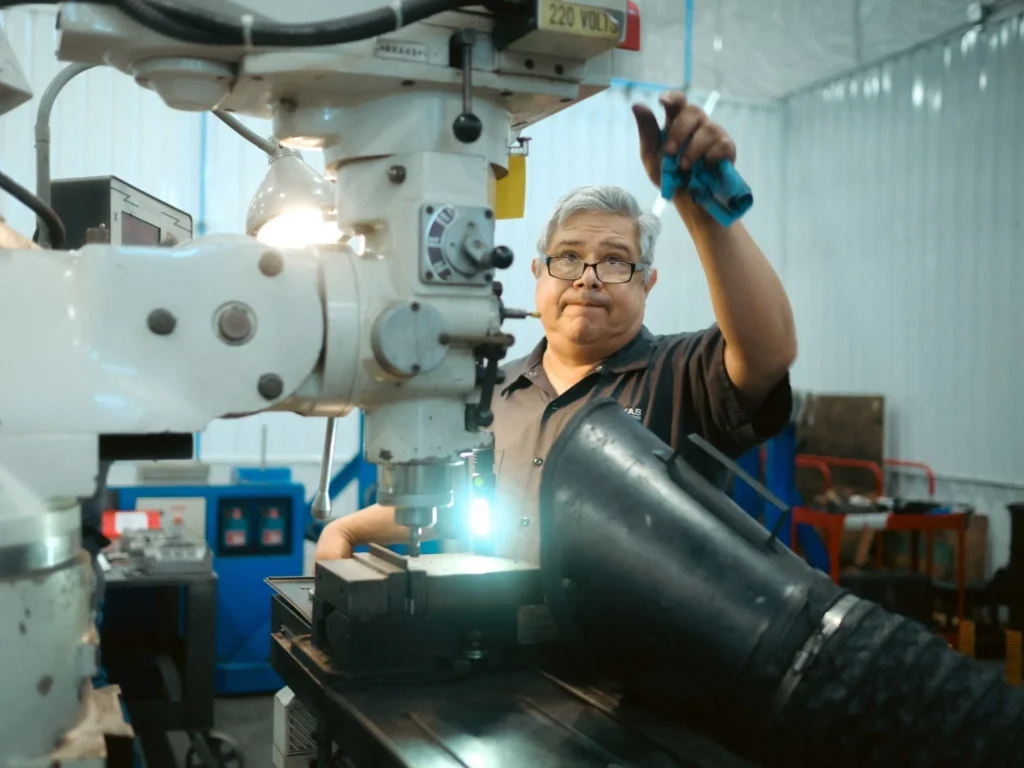
Injection mold making requires machining expertise, precision fitting, mechanical aptitude, and practical knowledge of how a mold performs in production. Our mold makers work directly with tooling engineers and process engineers to identify problems, make adjustments, and support consistent molding performance.
Our Houston tooling operation supports new mold construction, mold modifications, preventive maintenance, tooling transfers, and production troubleshooting. When a program requires additional capacity or specialized resources, we also work with established global mold-building partners while maintaining internal oversight of mold design and production readiness.
Injection Mold Building Capabilities
Texas Injection Molding supports tooling from lower-volume molds to complex production tools, based on part geometry, volume, and production requirements.
Low-Volume & Development Tooling
SPI Class 104 and 105 molds provide a practical tooling approach for lower-volume production and certain development applications. Depending on the program, these molds may use standardized mold bases, machined inserts, or hand-loaded components to reduce tooling complexity while meeting the application’s production requirements.
Production Tooling
SPI Class 102 and 103 molds support repeatable production over longer program lifecycles. Mold configuration is determined by part geometry and production requirements and may incorporate multiple cavities, slides, lifters, collapsible cores, hot runner systems, or automatic unscrewing mechanisms.
High-Volume Tooling
SPI Class 101 molds are designed for demanding, high-volume production programs. These tools typically incorporate hardened molding surfaces, wear-resistant components, optimized cooling, and greater levels of automation. Mold design may also account for robotics, end-of-arm tooling, automated inspection, and other production systems.
Tooling for Complex Molded Parts
Part geometry often determines the complexity of the injection mold. Our tooling and engineering teams evaluate how molded features will be formed, cooled, released, and handled during production to develop an appropriate tooling strategy.
Slides & Lifters: Slides and lifters create undercuts and other features that cannot be released through a conventional straight-pull mold.
Unscrewing Cores: Automatic unscrewing systems can be incorporated into molds for threaded features that cannot be released using conventional ejection.
Hot Runner Systems: Hot runner systems can reduce runner waste and provide greater control over material delivery for applications where production requirements justify their use.
Hand-Loaded Inserts: Hand-loaded cores and inserts can provide a practical approach for certain lower-volume parts with undercuts or complex features without adding automated mold actions.
Overmolding Tooling: Injection molds can be designed for insert molding and overmolding applications that combine molded resin with another component or material.
Automation Integration: Molds can be developed to work with robots, end-of-arm tooling, inspection equipment, cooling fixtures, and other systems used to automate production and part handling.
A Structured Mold Design Review Process
Every new mold goes through a structured design review with tooling, project, and process engineering before production.
Preliminary Mold Design Review
Reviews customer specifications, part drawings, tooling requirements, and molding equipment before mold design begins.
View Preliminary Mold Design Checklist
Mold Design Review
Reviews detailed 2D and 3D mold drawings, including the mold base, cores and cavities, ejection, cooling, and runner systems.
View Mold Design Review Checklist
Final Mold Inspection
Inspects completed in-house and offshore molds for condition and production readiness before first-article trials begin.
View Mold Review Checklist
In-House Tooling Support Throughout Production
Our in-house tooling team supports mold maintenance, engineering changes, and production needs throughout the life of the tool.
New Mold & Transfer Tooling Support: Incoming molds are inspected, fitted, modified, and tuned as needed before production.
Engineering Changes: Our in-house tooling team can complete many dimensional and feature modifications to existing molds.
Preventive Mold Maintenance: Molds are inspected and maintained between runs, with cycle counts used to help schedule preventive maintenance.
Fixtures & Automation Tooling: End-of-arm tooling, cooling fixtures, assembly fixtures, and other production-support tooling can be built in-house.
Need Support With an Injection Mold?
Whether you are developing a new production mold, transferring existing tooling, or modifying a mold already in service, Texas Injection Molding can evaluate your tooling and production requirements.
Get In Touch
Call us
Monday – Friday, 8am – 5pm CT
Email us
We’ll respond within 24 hours
Visit us
Houston, TX 77034


Visit www.texasinjectionmolding.com to learn more about our capabilities.