Author name: Diego Soberanes Hernandez

Technician inspecting an injection molded plastic part using a digital measurement system during a DFM and quality review.

DFM for Injection Molding: 12 Design Rules That Reduce Cost and Improve Part Quality

12 design rules that reduce tooling cost, improve part quality, and shorten development cycles — from the engineers at Texas Injection Molding. Design for Manufacturability (DFM) in injection molding is the practice of designing parts with the constraints and capabilities of the injection molding process in mind from the beginning. Parts designed without DFM principles […]

DFM for Injection Molding: 12 Design Rules That Reduce Cost and Improve Part Quality Read More »

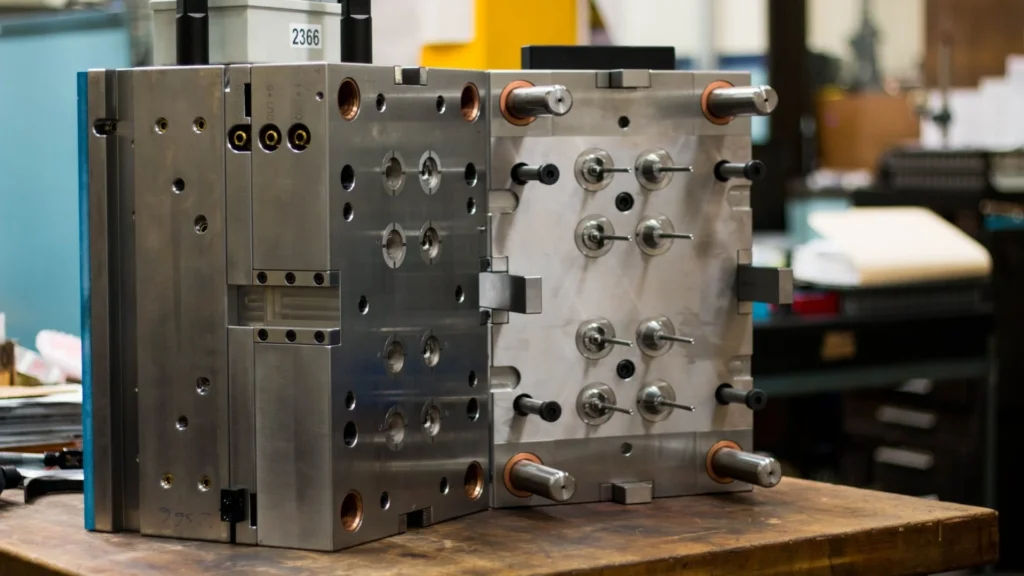
Precision injection mold tooling used to produce custom plastic parts

Injection Molding Cost Explained: What Drives Tooling Price, Part Cost, and How to Reduce Both

Understanding tooling cost, piece price, and the key variables that drive injection molding program economics. Injection molding cost has two distinct components that must be understood separately: tooling cost, the one-time investment to build the mold, and piece price, the per-part cost to run production. Conflating them leads to poor sourcing decisions — either over-investing

Injection Molding Cost Explained: What Drives Tooling Price, Part Cost, and How to Reduce Both Read More »

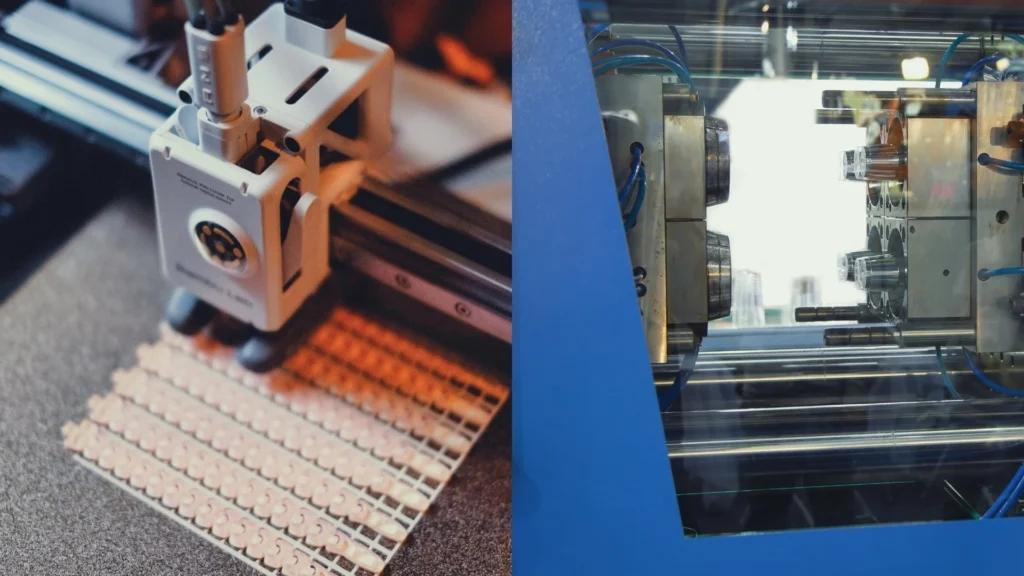
3D printer and injection molding machine comparing plastic part manufacturing methods

Injection Molding vs. 3D Printing: A Practical Guide to Choosing the Right Manufacturing Method for Your Part

A practical framework for choosing between injection molding and 3D printing based on volume, geometry, material requirements, and timeline. Injection molding and 3D printing are both plastic part manufacturing processes, but they serve fundamentally different points in a product’s lifecycle. The choice between them is not primarily about quality or capability — it is about

Injection Molding vs. 3D Printing: A Practical Guide to Choosing the Right Manufacturing Method for Your Part Read More »

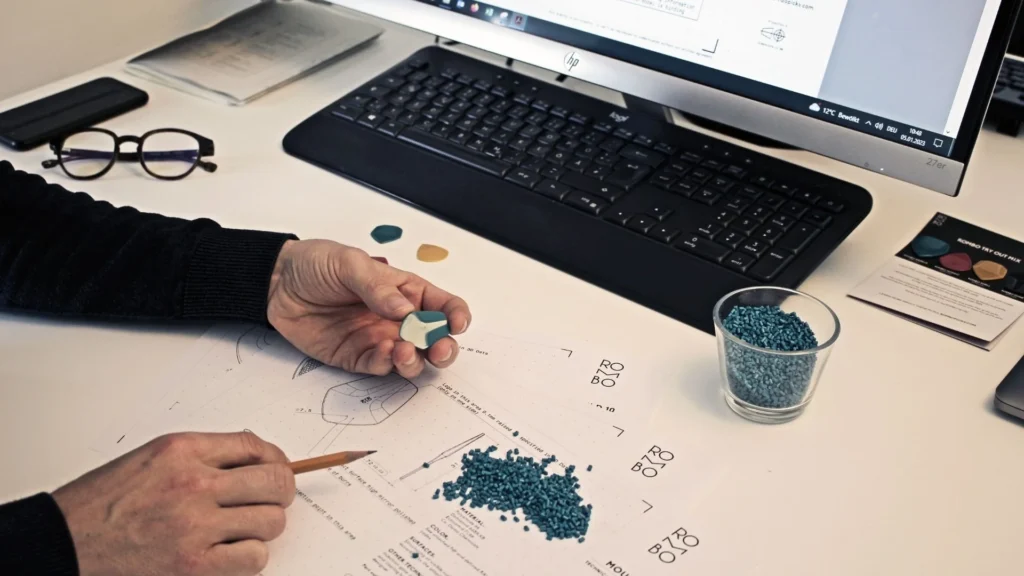
Engineer reviewing technical drawings, plastic resin pellets, and a molded part sample for injection molded part design.

Designing Injection Molded Parts: The Engineer’s Guide to Wall Thickness, Draft Angles, and Gating

Part design determines everything in injection molding. The shape of the part defines what the mold must do, what the process must achieve, and what the finished part can cost. Design decisions made before the mold is cut are essentially free to change. The same decisions after steel is cut can cost tens of thousands

Designing Injection Molded Parts: The Engineer’s Guide to Wall Thickness, Draft Angles, and Gating Read More »

Temperature gauge placed in plastic resin pellets to represent glass transition temperature and thermal performance in injection molding.

Glass Transition Temperature (Tg) Explained: Why It Matters for Injection Molded Plastics

How Tg defines the upper thermal limit of injection molded plastics — and why it matters for material selection, mold design, and part performance. Glass transition temperature (Tg) is the temperature at which an amorphous thermoplastic transitions from a hard, glassy state to a soft, rubbery one. Below Tg, the polymer chains are locked in

Glass Transition Temperature (Tg) Explained: Why It Matters for Injection Molded Plastics Read More »

Orange flame-rated plastic electrical connector on a circuit board for UL 94 injection molding applications.

UL 94 Flame Retardant Classifications: What Each Rating Means for Your Plastic Part

What V-0, V-1, V-2, HB, and 5V mean for injection molded plastic parts — and how to specify the right rating for your application. UL 94 is the standard for flammability testing of plastic materials for parts in devices and appliances, published by Underwriters Laboratories. It classifies plastics by how they respond to a standardized

UL 94 Flame Retardant Classifications: What Each Rating Means for Your Plastic Part Read More »

Green, blue, and red plastic resin pellets used for injection molding material selection

Injection Molding Material Selection: How to Choose the Best Plastic for Your Part

Material selection is the most consequential design decision in injection molding. The wrong material produces a part that fails in service, absorbs moisture and loses its dimensions, cracks under chemical exposure, or costs twice what was budgeted. The right material does the opposite: it makes the design work, the tooling straightforward, and the production consistent.

Injection Molding Material Selection: How to Choose the Best Plastic for Your Part Read More »

Small precision metal components used in metal injection molding applications on a clean white background.

Metal Injection Molding (MIM) Explained: How It Works, Which Metals Apply, and When to Choose It Over Die Casting

Metal injection molding (MIM) is a manufacturing process that combines the geometric freedom of plastic injection molding with the material properties of metal. Fine metal powder is mixed with a thermoplastic binder to create a feedstock that processes through a standard injection molding machine. The molded part — called a green part — then goes

Metal Injection Molding (MIM) Explained: How It Works, Which Metals Apply, and When to Choose It Over Die Casting Read More »

Injection molded plastic components commonly made from ABS or similar engineering thermoplastics

ABS Injection Molding: Everything You Need to Know About Processing, Designing, and Finishing ABS Parts

Material properties, processing requirements, design guidelines, and applications for ABS — one of the most common injection molding plastics. ABS — acrylonitrile butadiene styrene — is the most widely used engineering thermoplastic in injection molding. It is not a single material but a terpolymer whose three components each contribute distinct properties: acrylonitrile adds chemical resistance

ABS Injection Molding: Everything You Need to Know About Processing, Designing, and Finishing ABS Parts Read More »

Clear polycarbonate automotive headlamp lens showing optical clarity and impact resistance

Polycarbonate Injection Molding: How to Design, Process, and Specify PC Parts

A practical guide for engineers, product teams, and purchasing professionals specifying polycarbonate injection molded parts. Polycarbonate, often abbreviated as PC, is one of the most widely used engineering thermoplastics in injection molding. It is valued for a combination of properties that few plastics match at the same time: exceptional impact strength, high optical clarity, dimensional

Polycarbonate Injection Molding: How to Design, Process, and Specify PC Parts Read More »