A practical guide to LDPE properties, applications, and injection molding considerations for engineers and buyers selecting a flexible, low-cost resin.
Low-density polyethylene (LDPE) is a lightweight thermoplastic known for its flexibility, toughness, and chemical resistance. It is a common choice for parts that need to bend, squeeze, or form a compliant fit rather than carry a structural load.
This guide explains what LDPE is, where it performs well, and which material and design considerations matter when specifying it for an injection molded part.
What Is LDPE?
LDPE is a semi-crystalline thermoplastic in the polyethylene family. Its highly branched polymer chains prevent the molecules from packing as closely together as they do in high-density polyethylene (HDPE). This gives LDPE lower density, lower stiffness, and greater flexibility.
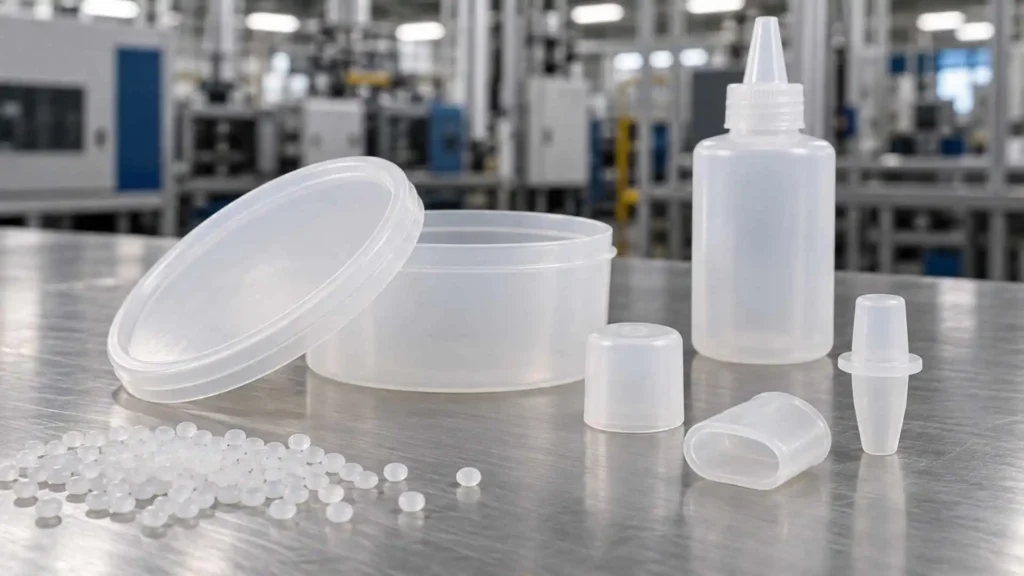
Manufacturers use LDPE in films, squeeze bottles, tubing, flexible lids, closures, and other products that benefit from its soft, tough behavior. In injection molding, it is useful for flexible caps, plugs, and components that need to deform without breaking.
LDPE also absorbs very little moisture and resists many common chemicals. These properties make it useful in wet environments and fluid-contact applications, provided the selected grade is compatible with the actual service conditions.
Properties of LDPE
LDPE offers a useful balance of flexibility, impact resistance, and low material cost. Exact properties vary by resin grade, so the following characteristics are a starting point for selection rather than a finished-part specification.
| Property | Typical Characteristic | Design Note |
|---|---|---|
| Density | Approximately 0.91–0.94 g/cm³ | Generally lower than HDPE; supports lightweight parts |
| Flexibility | High; soft and bendable | Useful when compliance matters more than rigidity |
| Impact Resistance | Good toughness, including at low temperatures | Confirm performance for the selected grade, temperature, and part geometry |
| Chemical Resistance | Good resistance to many acids, bases, and aqueous chemicals | Check the specific chemical, concentration, temperature, and exposure duration |
| Moisture Absorption | Very low | Limits dimensional changes caused by humidity; does not eliminate molding shrinkage or thermal expansion |
| Heat Resistance | Limited; grade and load dependent | Verify service-temperature data rather than treating the melting point as an operating limit |
| Material Cost | Generally low | A commodity resin; total part cost also depends on tooling, geometry, and processing |
LDPE or HDPE?
Evaluate LDPE when a part needs to flex, squeeze, or provide a compliant fit. Evaluate HDPE when greater stiffness and strength are priorities. Compare specific grades against the part’s load, temperature, chemical exposure, and dimensional requirements before making the final choice.
Advantages of LDPE
- Flexibility and toughness: LDPE bends and absorbs impact, making it useful for parts that need to deform during assembly or use.
- Chemical resistance: It performs well against many acids, bases, and water-based chemicals when the grade and exposure conditions are appropriate.
- Low moisture absorption: LDPE absorbs very little water, supporting use in wet or humid environments.
- Compliant sealing surfaces: Its softness can support flexible closures and sealing features when the geometry and contact pressure are properly designed.
- Low material cost: Commodity-resin pricing makes LDPE worth evaluating for cost-sensitive parts.
- Reprocessability: As a thermoplastic, LDPE can be remelted and reprocessed under suitable conditions. It carries resin identification code 4, although collection and recycling availability vary by product and location.
Limitations of LDPE
- Low stiffness and strength: LDPE is generally unsuitable when a part must remain rigid under substantial load.
- Limited heat resistance: Parts can soften or deform as temperature rises, especially under load. The acceptable operating temperature depends on the grade and application.
- Creep and dimensional movement: Sustained loading can cause deformation. Molding shrinkage and thermal expansion also require attention in close-fitting parts.
- Difficult bonding and printing: Its low surface energy can require surface treatment or specialized adhesives, inks, and coatings.
- UV sensitivity: Unstabilized LDPE can degrade during prolonged sunlight exposure. Outdoor applications may require a UV-stabilized grade.
What Products Are Made from LDPE?
LDPE is used in packaging, consumer products, medical components, and industrial applications. However, these products are made through several manufacturing processes. Films and tubing are typically extruded, squeeze bottles are commonly blow molded, and many caps, plugs, and flexible closures are injection molded.
| Application Area | Typical LDPE Products | Manufacturing Consideration |
|---|---|---|
| Packaging | Films, squeeze bottles, flexible lids, and closures | Film extrusion, blow molding, or injection molding, depending on the product |
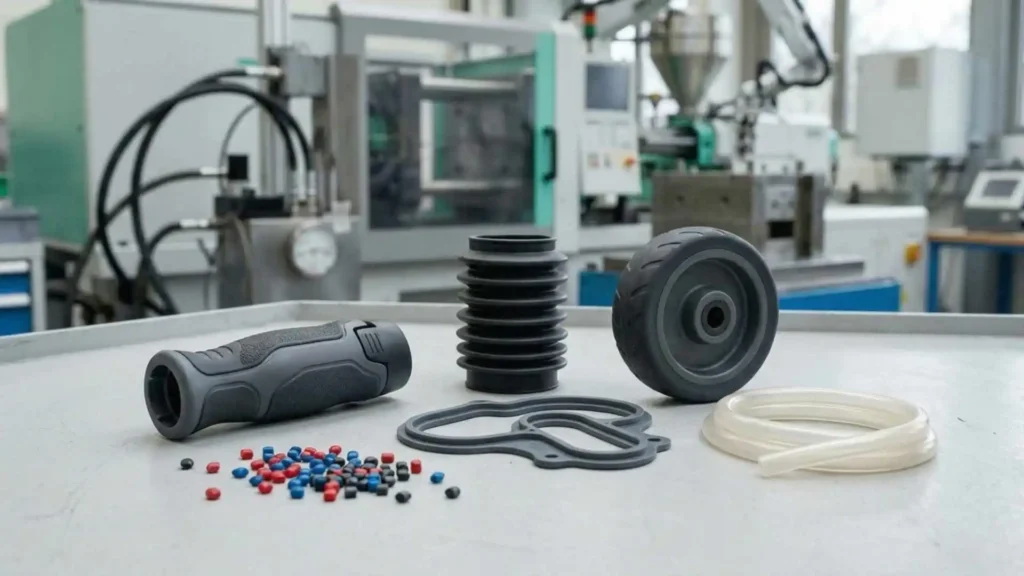
| Consumer Products | Flexible housewares, toys, and tubing | Injection molding or extrusion, depending on geometry |
| Medical and Healthcare | Squeeze dispensers, closures, and flexible components | Requires an application-appropriate grade and validation of the finished component |
| Industrial | Protective caps, plugs, and flexible fittings | Injection molding suits many discrete components with compliant features |
| Caps and Closures | Soft lids, stoppers, and sealing components | Resin grade, geometry, and fit determine sealing performance |
LDPE in Injection Molding
Injection-molding grades of LDPE can provide good flow and economical processing for flexible parts. LDPE is not hygroscopic, so it generally does not require pre-drying. Material handling should still prevent contamination and address any surface condensation in accordance with the resin supplier’s guidance.
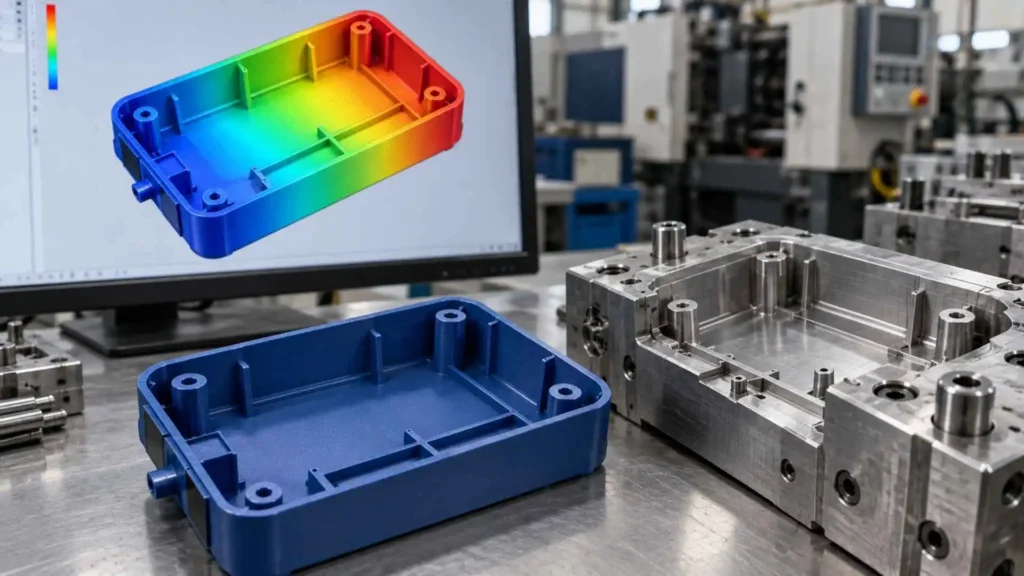
Because LDPE is semi-crystalline, shrinkage must be considered during mold design. Resin grade, wall thickness, gate location, packing, and cooling conditions all influence the dimensions and consistency of the finished part.
When developing an LDPE component, review these factors before tooling is finalized:
- Grade selection: Specify an injection-molding grade with flow and mechanical properties appropriate for the part.
- Wall thickness and cooling: Favor reasonably uniform wall sections to help control cooling differences, shrinkage, and warpage.
- Fit and sealing: Evaluate the actual mating geometry, contact pressure, temperature, and load duration rather than relying on softness alone.
- Finishing: Plan for surface treatment or specialized bonding and printing systems when secondary operations are required.
For a stiffer polyethylene alternative, see our guide to HDPE properties and injection molding.
Frequently Asked Questions
What is the difference between LDPE and HDPE?
LDPE has more highly branched polymer chains, giving it lower density, greater flexibility, and a softer feel. HDPE has less branching and more closely packed chains, which generally provide greater stiffness and strength. The better choice depends on whether the part needs compliance or rigidity, along with its other performance requirements.
Is LDPE food-safe?
Food-contact LDPE grades are used in packaging, lids, and squeeze containers. The material name alone does not establish suitability for every food-contact application. Specify an appropriate grade and confirm its compliance for the intended food type, temperature, and conditions of use.
Is LDPE recyclable?
LDPE can be recycled and carries resin identification code 4. Acceptance depends on the product form and local recycling system. Flexible films may require a separate collection stream, and the resin code alone does not guarantee acceptance.
Why is LDPE so flexible?
LDPE’s branched molecular structure prevents its chains from packing as tightly as those in HDPE. This reduces crystallinity and density, producing a softer, more flexible material.
Choosing the Right Material for Your Part
LDPE is worth considering when flexibility, toughness, chemical resistance, and low material cost matter more than structural rigidity or elevated-temperature performance. Its limitations become more significant when a part must hold tight dimensions, resist sustained loading, or maintain its shape in heat.
Confirm the resin grade alongside a design-for-manufacturability (DFM) review before tooling begins. Reviewing material behavior, part geometry, fit, and processing requirements together helps protect cost, quality, and production consistency.