A practical comparison of plastic manufacturing processes — injection molding, blow molding, thermoforming, rotational molding, extrusion, compression molding, and more — to help you choose the right method for your specific part application.
Manufacturing with engineering plastics encompasses a wide range of processes, and the choice of method is one of the highest-leverage decisions in product development. Choose the right process and your part costs are predictable, quality is consistent, cycle time is optimized, and scale is achievable. Choose the wrong one and you are fighting the physics of the process from the first prototype.
This guide covers the major plastic manufacturing processes, how each works, and which applications each serves best to create high-performing products.
Injection Molding
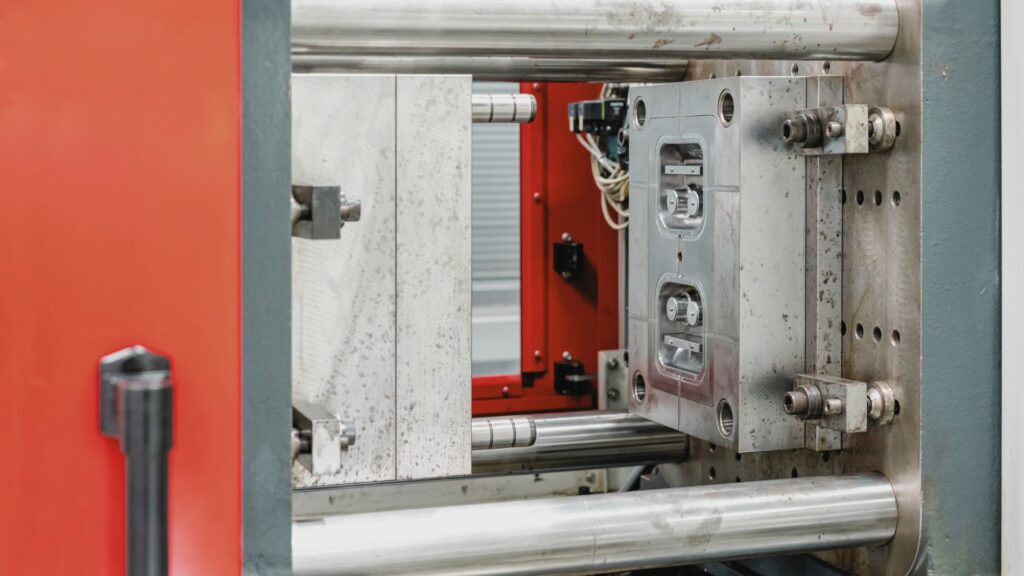
Plastic injection molding is the dominant process for solid plastic parts and finished products at medium to high volume. Raw plastic resin, typically supplied as solid pellets, is fed into a heated barrel where melting takes place under controlled temperature and shear. This melted polymer is injected under high pressure into a precision metal mold cavity, cooled, and ejected as a finished part. The process delivers excellent dimensional control, complex geometry, and a wide range of material options.
Injection molding is also the right choice when volume exceeds 1,000 parts, part geometry is complex, surface finish matters, dimensional consistency through a repeatable form matters, and a wide material selection is required. The tooling investment, or mold, is the primary cost barrier to entry.
Best Fit for Injection Molding
Injection molding is usually the right choice for solid, complex plastic parts that need repeatable dimensions, consistent surface finish, and scalable production volume across demanding commercial and industrial applications.
Blow Molding
Blow molding produces hollow plastic parts by inflating a heated plastic parison or preform inside a mold using compressed air. It is the standard process for bottles, containers, and hollow objects of all sizes — from small personal care product bottles to 500-gallon industrial tanks.
Blow molding cannot produce solid parts or complex wall geometry, and it is also limited in its ability to create internal mechanical features. However, it is the right choice when the part is hollow, wall thickness uniformity is acceptable, tight tolerances are not the primary requirement, and volume is high enough to justify tooling.
Thermoforming
Thermoforming heats a plastic sheet until pliable, then forms it over a mold using vacuum, pressure, or matched tooling. It produces parts with large surface areas and relatively simple geometry — automotive door liners, refrigerator inner liners, packaging clamshells, and medical trays.
Thermoforming tooling is significantly cheaper than injection molds, making it attractive for low-to-medium volume programs and large parts where injection molding would require impractically large clamp tonnage. Its limitation is that geometry is constrained to what can be formed from a flat sheet, wall thickness is uneven, and material options are more limited than injection molding.
Rotational Molding
Rotational molding (rotomolding) loads plastic powder into a closed mold that is then rotated in an oven. As the polymer powder reaches its melting point, it fuses and coats the interior walls of the mold as it rotates. It produces large hollow parts with uniform wall thickness — kayaks, outdoor furniture, industrial tanks, and playground equipment.
Tooling cost is low compared to injection molding or blow molding, making it suitable for low volumes of large hollow parts. Cycle times are long, often 15 to 45 minutes, and dimensional control is loose compared to injection molding.
Extrusion
Extrusion forces melted plastic pellets or resin through a shaped die to produce continuous profiles — including pipe, tubing, window frames, sheet, film, and wire insulation. Unlike injection molding, extrusion is a continuous process rather than a cyclic one. The profile passes through a cooling trough and is cut to length after it exits the die and solidifies.
Extrusion cannot produce closed, three-dimensional shapes. That type of geometry typically requires injection molding, blow molding, or another molded process depending on whether the part is solid or hollow in form.
Compression Molding
Compression molding places a measured amount of heated material — typically a thermoset compound, polymer charge, or rubber — directly in an open mold cavity. The mold then closes under high hydraulic pressure and heat, causing the material to flow, fill the cavity, and cure into its final shape.
This process is common for high-strength thermoset parts such as electrical insulators, switchgear components, vehicle seating cushions, rubber seals, and composite structures where the cured part cannot be re-melted and injection molding is not suitable.
Plastic Manufacturing Process Comparison
Each plastic manufacturing process has a different ideal use case. The best choice depends on part geometry, volume, tolerance requirements, material needs, tooling budget, and whether the part is solid, hollow, sheet-based, or continuous.
| Process | Best For | Key Advantages | Limitations |
|---|---|---|---|
| Injection Molding | Solid, complex parts and products at medium-to-high volume. | Wide material range, excellent tolerances, strong repeatability, and complex geometry. | Higher tooling investment compared to some other processes. |
| Blow Molding | Hollow containers, bottles, tanks, and ducts. | Low per-part cost at volume and strong efficiency for hollow parts. | Limited to hollow geometry and less suited for tight-tolerance features. |
| Thermoforming | Large-area, simple-geometry parts such as trays, panels, and liners. | Lower tooling cost and practical for large parts or lower-volume programs. | Uneven wall thickness, looser tolerances, and more limited geometry. |
| Rotational Molding | Large hollow parts at low-to-medium volume. | Low tooling cost and good wall thickness uniformity for large hollow forms. | Long cycle times and loose dimensional control. |
| Extrusion | Continuous profiles such as pipe, tubing, film, sheet, and window frames. | Efficient continuous production for consistent cross-sections. | Cannot produce closed three-dimensional shapes. |
| Compression Molding | Thermoset parts, rubber components, seals, and composite structures. | Useful for engineering plastics and compounds that cure under heat and pressure. | Not ideal for complex thermoplastic parts that require high-volume precision molding. |
Process Selection Rule
Start with part geometry. Solid, complex plastic parts usually point toward injection molding. Hollow parts often point toward blow molding or rotational molding. Flat or thin-wall panels may point toward thermoforming. Continuous profiles require extrusion.
Frequently Asked Questions
What is the difference between injection molding and thermoforming?
Injection molding injects molten plastic into a closed mold to produce solid, complex three-dimensional parts with tight tolerances. Thermoforming heats a sheet of plastic resin and forms it over a mold using vacuum or pressure, producing parts with larger surface areas, simpler geometry, and lower tooling cost. Injection molding is the better process for precision parts; thermoforming is better for large, thin-wall panels and packaging at lower investment.
When should I use blow molding instead of injection molding?
Use blow molding when the part is hollow, such as bottles, containers, tanks, and ducts. Injection molding is also not the most economical process for truly hollow closed parts. For solid parts with complex geometry, injection molding is usually the right process.
Which plastic manufacturing process is best for large parts?
It depends on the geometry and application. Thermoforming is often used for large, thin-wall panels and trays. Rotational molding is commonly used for large hollow parts such as tanks and outdoor equipment. Injection molding can produce large parts, but tooling size and press tonnage can make the investment significantly higher.
Which process has the lowest tooling cost?
Thermoforming and rotational molding typically have lower tooling costs than injection molding. However, lower tooling cost does not always mean lower total unit cost over time. At higher volumes, injection molding may offer better repeatability, lower per-part cost, and better long-term economics.
Which process is best for tight-tolerance plastic parts?
Injection molding is generally the best choice for tight-tolerance plastic parts because it uses precision metal tooling and can maintain consistent part dimensions across production runs. Thermoforming, rotational molding, and blow molding are typically less precise.