A practical guide to thermoplastics, how they differ from thermosets, and what their properties mean for injection molded parts.
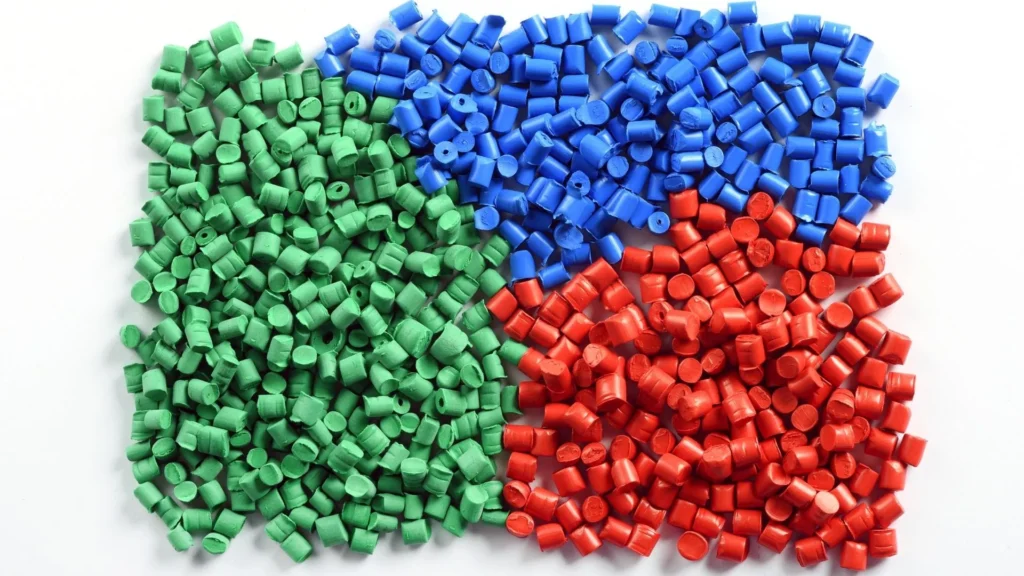
Thermoplastics are a broad family of plastics that can be softened with heat, formed into a shape, and hardened by cooling. Materials such as polypropylene, ABS, nylon, and polycarbonate belong to this family, but they offer very different performance characteristics.
For engineers and buyers, understanding those differences is the starting point for choosing a resin. This guide explains how thermoplastics behave, their advantages and limitations, and the factors that matter when selecting a material for injection molding.
What Is a Thermoplastic?
A thermoplastic is a polymer that becomes soft enough to flow when heated to its processing temperature and solidifies when cooled. This physical change is reversible, allowing suitable material to be reheated and reshaped.
Unlike thermosets, conventional thermoplastics do not form a permanent, chemically crosslinked network during molding. Their polymer chains can move relative to one another when sufficient heat is applied, allowing the material to flow into a mold.
This behavior supports the standard injection molding cycle: heat the resin, fill the mold, cool the part, and eject it. However, the ability to remelt a thermoplastic does not mean it can be reprocessed indefinitely without changes in its properties.
Thermoplastic vs. Thermoset
The main difference between a thermoplastic and a thermoset is how each material becomes solid. A thermoplastic solidifies as it cools. A thermosetting material cures through a chemical reaction that creates a permanent crosslinked structure.
Once cured, a thermoset cannot be melted back into a processable material. Excessive heat causes degradation rather than useful melting. Both material families can be injection molded, but they require different processing conditions and equipment configurations.
| Characteristic | Thermoplastic | Thermoset |
|---|---|---|
| Behavior with heat | Softens and can flow when heated to a suitable processing temperature. | Cures permanently and cannot be remelted after curing. |
| How the part solidifies | Heat is removed until the material becomes solid enough to eject. | A curing reaction forms a permanent crosslinked structure. |
| Scrap reuse and recycling | Suitable material may be remelted and reprocessed, subject to resin quality and application requirements. | Cannot be recycled by conventional remelting. Other recovery methods depend on the material and available facilities. |
| Common processing methods | Injection molding, extrusion, blow molding, and thermoforming, depending on the resin. | Thermoset injection molding, compression molding, transfer molding, and casting. |
| Examples | ABS, polypropylene, polyethylene, nylon, polycarbonate, and PEI. | Epoxy, phenolic resins, and cured silicone rubber. |
| Typical applications | Housings, containers, connectors, gears, clips, and other molded components. | Electrical insulation, encapsulated electronics, and specialized heat-resistant or flexible components. |
Why This Distinction Matters
Thermoplastics are the standard choice for many injection molding programs, but thermosets also have established molding processes. Confirm the material family early because it affects tooling, temperature control, processing, and the potential to reuse production scrap.
For a closer comparison, see Thermoplastic vs. Thermoset Materials.
Categories of Thermoplastics
Thermoplastics are often grouped by cost and performance. These categories help narrow the options, but the specific resin grade determines whether a material will meet the application’s requirements.
Commodity Thermoplastics
Polypropylene (PP), polyethylene (PE), polystyrene (PS), and polyvinyl chloride (PVC) are widely used for cost-sensitive applications. Depending on the material, common uses include containers, packaging, fittings, and general-purpose molded parts.
Engineering Thermoplastics
Nylon (PA), polycarbonate (PC), acetal (POM), and polybutylene terephthalate (PBT) are used when parts require particular combinations of strength, stiffness, wear resistance, impact resistance, or heat performance. No engineering resin provides the best performance in every category.
High-Performance Thermoplastics
PEEK, polyetherimide (PEI), and polyphenylene sulfide (PPS) serve applications with demanding thermal, mechanical, or chemical requirements. Their higher material costs and processing requirements should be justified by the operating conditions of the part.
Amorphous vs. Semi-Crystalline Thermoplastics
Thermoplastics can also be classified by their molecular structure. This distinction is separate from the commodity, engineering, and high-performance categories.
- Amorphous thermoplastics: Materials such as ABS and polycarbonate have no ordered crystalline regions. They soften progressively through and above their glass transition region rather than having a crystalline melting point. They generally exhibit lower molding shrinkage, which can help with dimensional control.
- Semi-crystalline thermoplastics: Materials such as polypropylene, nylon, and acetal contain both ordered and disordered regions. Their crystalline regions melt over a characteristic temperature range. These materials often offer good chemical and wear resistance, but crystallization can contribute to greater shrinkage and warpage.
These are general trends. Reinforcement, additives, part geometry, and processing conditions can change the performance of a particular grade.
Advantages of Thermoplastics
- Efficient production: Parts solidify through cooling without a curing reaction, supporting repeatable molding cycles. Actual cycle time depends on the resin, wall thickness, tooling, and cooling system.
- Broad material selection: Available grades range from flexible materials to rigid structural resins, with options for clarity, impact resistance, wear resistance, and elevated-temperature use.
- Design flexibility: Injection molding can incorporate features such as ribs, bosses, clips, and snap-fits when the material and geometry are suitable.
- Potential scrap reuse: Clean, compatible runners and rejected parts may be reground and reused when supplier guidance and customer specifications allow it.
- Repeatability at volume: A controlled process can produce consistent parts across long production runs.
Limitations of Thermoplastics
- Temperature sensitivity: Stiffness and load-bearing capability can decline as temperature increases. Evaluate the selected grade under the expected load and exposure time rather than using melting temperature as a service-temperature limit.
- Creep under sustained load: A thermoplastic part can slowly deform over time, particularly at elevated temperatures. Resin choice, reinforcement, and part design affect this behavior.
- Environmental sensitivity: Moisture, chemicals, and UV exposure can affect performance. For example, moisture absorption can change the dimensions and stiffness of nylon parts.
- Limits on reprocessing: Heat history, contamination, and material degradation can restrict scrap reuse. A remeltable material is not automatically recyclable through local collection systems.
Thermoplastics in Injection Molding
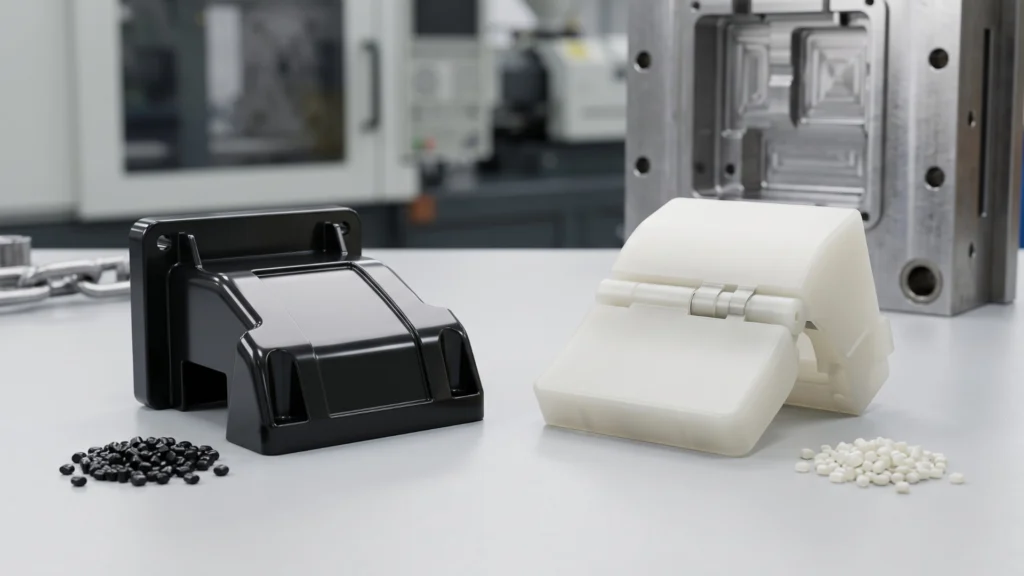
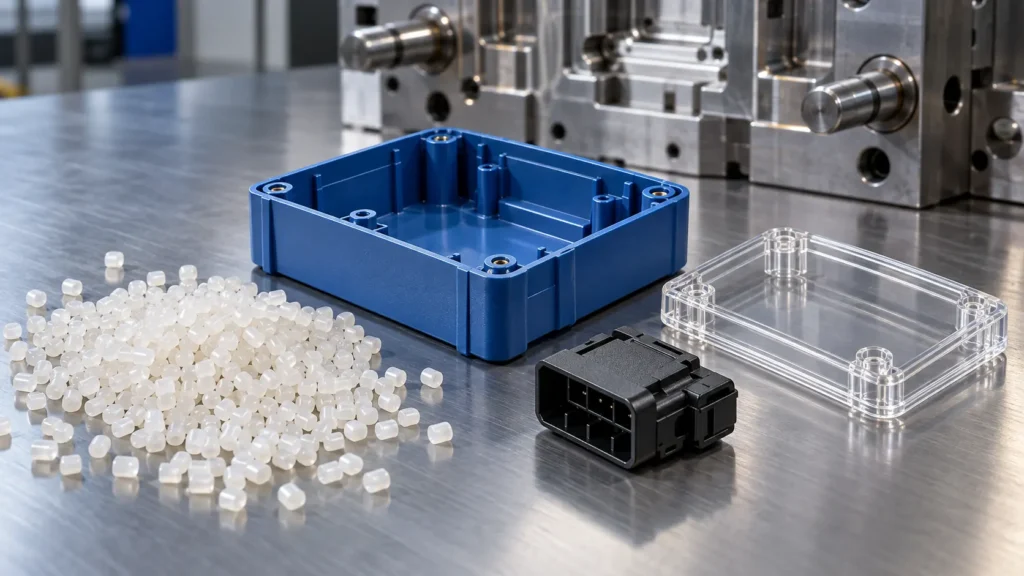
In thermoplastic injection molding, resin pellets enter a heated barrel, where heat and screw rotation prepare the material for injection. The molten resin fills a closed mold, pressure is maintained during packing, and the part cools until it can be ejected.
The selected thermoplastic affects far more than the finished part’s properties. Its flow behavior, shrinkage, drying requirements, and processing temperatures influence gate placement, mold dimensions, cooling, and equipment selection. High-performance resins may require capabilities beyond those of a standard molding setup.
Material selection and mold design should therefore be evaluated together. See our Guide to Injection Molding Material Selection for a practical framework.
Frequently Asked Questions
What is the difference between a thermoplastic and a thermoset?
A thermoplastic softens when heated and solidifies when cooled, allowing suitable material to be remelted. A thermoset forms a permanent crosslinked structure during curing and cannot be remelted afterward. This difference affects processing, tooling, and scrap reuse.
Are all injection molded plastics thermoplastics?
No. Thermoplastics are widely used in conventional injection molding, but thermosets can also be injection molded. Liquid silicone rubber, phenolic resins, and epoxy molding compounds use specialized processes in which the material cures inside the mold.
What are the most common thermoplastics?
Common examples include polypropylene, polyethylene, ABS, polystyrene, PVC, nylon, and polycarbonate. Their properties vary substantially, so selection should be based on the part’s operating conditions, geometry, and cost requirements.
What does amorphous vs. semi-crystalline mean?
Amorphous thermoplastics have no ordered crystalline regions, while semi-crystalline thermoplastics contain both ordered and disordered regions. This affects softening behavior, shrinkage, chemical resistance, and dimensional stability. Neither structure is inherently better for every application.
Choosing the Right Material for Your Part
The right thermoplastic matches the part’s mechanical loads, operating temperature, chemical exposure, dimensional requirements, appearance, and cost target. Start with those requirements, then compare specific grades using supplier data and testing that reflects the actual application.
Confirm material selection alongside a design-for-manufacturability review before tooling is finalized. Evaluating the resin and part geometry together helps reduce the risk of tooling changes, processing problems, and performance issues in production.