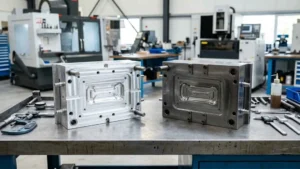
Injection Molding

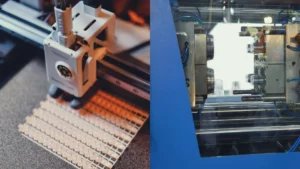
3D printer and injection molding machine comparing plastic part manufacturing methods

Injection Molding vs. 3D Printing: A Practical Guide to Choosing the Right Manufacturing Method for Your Part

A practical framework for choosing between injection molding and 3D printing based on volume, geometry, material requirements, and timeline. Injection molding and 3D printing are both plastic part manufacturing processes, but they serve fundamentally different points in a product’s lifecycle. The choice between them is not primarily about quality or capability — it is about […]

Injection Molding vs. 3D Printing: A Practical Guide to Choosing the Right Manufacturing Method for Your Part Read More »

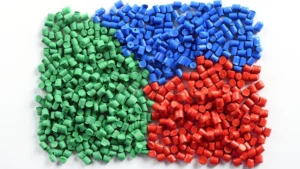
Green, blue, and red plastic resin pellets used for injection molding material selection

Injection Molding Material Selection: How to Choose the Best Plastic for Your Part

Material selection is the most consequential design decision in injection molding. The wrong material produces a part that fails in service, absorbs moisture and loses its dimensions, cracks under chemical exposure, or costs twice what was budgeted. The right material does the opposite: it makes the design work, the tooling straightforward, and the production consistent.

Injection Molding Material Selection: How to Choose the Best Plastic for Your Part Read More »

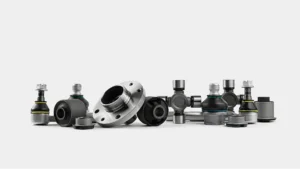
Small precision metal components used in metal injection molding applications on a clean white background.

Metal Injection Molding (MIM) Explained: How It Works, Which Metals Apply, and When to Choose It Over Die Casting

Metal injection molding (MIM) is a manufacturing process that combines the geometric freedom of plastic injection molding with the material properties of metal. Fine metal powder is mixed with a thermoplastic binder to create a feedstock that processes through a standard injection molding machine. The molded part — called a green part — then goes

Metal Injection Molding (MIM) Explained: How It Works, Which Metals Apply, and When to Choose It Over Die Casting Read More »

Injection molded plastic components commonly made from ABS or similar engineering thermoplastics

ABS Injection Molding: Everything You Need to Know About Processing, Designing, and Finishing ABS Parts

Material properties, processing requirements, design guidelines, and applications for ABS — one of the most common injection molding plastics. ABS — acrylonitrile butadiene styrene — is the most widely used engineering thermoplastic in injection molding. It is not a single material but a terpolymer whose three components each contribute distinct properties: acrylonitrile adds chemical resistance

ABS Injection Molding: Everything You Need to Know About Processing, Designing, and Finishing ABS Parts Read More »

Clear polycarbonate automotive headlamp lens showing optical clarity and impact resistance

Polycarbonate Injection Molding: How to Design, Process, and Specify PC Parts

A practical guide for engineers, product teams, and purchasing professionals specifying polycarbonate injection molded parts. Polycarbonate, often abbreviated as PC, is one of the most widely used engineering thermoplastics in injection molding. It is valued for a combination of properties that few plastics match at the same time: exceptional impact strength, high optical clarity, dimensional

Polycarbonate Injection Molding: How to Design, Process, and Specify PC Parts Read More »

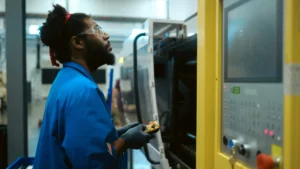
Injection molding technician operating machine controls on a production floor

Rapid Injection Molding: How the Process Works and When It Makes Sense

A practical guide for engineers and product teams. Rapid injection molding delivers real injection molded plastic parts in days to weeks, often making molded parts available earlier than full production steel tooling. It uses the same injection molding process and the same thermoplastic materials as production molding, but the tooling is made faster — typically

Rapid Injection Molding: How the Process Works and When It Makes Sense Read More »

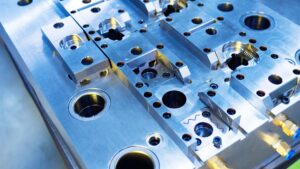
Close-up of precision-machined injection mold tooling with cavities, inserts, guide holes, and cooling line fittings for plastic part production.

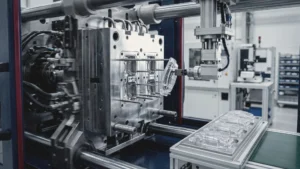
How Injection Molding Works: The Complete Step-by-Step Guide to the Plastic Manufacturing Process

A step-by-step guide to the plastic injection molding process — what happens at each stage and why it matters for part quality. Injection molding works by melting plastic pellets and injecting the molten material into a precision metal mold under high pressure. Once the plastic cools and solidifies, the mold opens, the part is ejected,

How Injection Molding Works: The Complete Step-by-Step Guide to the Plastic Manufacturing Process Read More »

Injection mold tooling mounted in a plastic injection molding machine for precision manufacturing

Types of Injection Molding Technology: From Standard Thermoplastics to Overmolding, Gas-Assist, and Metal Injection Molding

A complete overview of the major types of injection molding — for engineers and buyers who need to choose the right process. Injection molding is not a single process. The major types of injection molding share the same core principle — forcing molten material into a closed mold — but differ fundamentally in machine configuration,

Types of Injection Molding Technology: From Standard Thermoplastics to Overmolding, Gas-Assist, and Metal Injection Molding Read More »

Close-up of flexible green nylon polyamide mesh with overlapping netted strands, showing the material’s fine texture and open structure.

Types of Nylon: How to Choose the Right Grade for Your Injection Molded Part

A complete guide to nylon grades, properties, and how to choose the right one for your injection molded part. Nylon, technically polyamide (PA), is one of the most versatile and widely used engineering thermoplastics in injection molding. It combines mechanical strength, wear resistance, and thermal stability in a material that processes reliably and costs far

Types of Nylon: How to Choose the Right Grade for Your Injection Molded Part Read More »