
A practical guide for engineers and product teams.
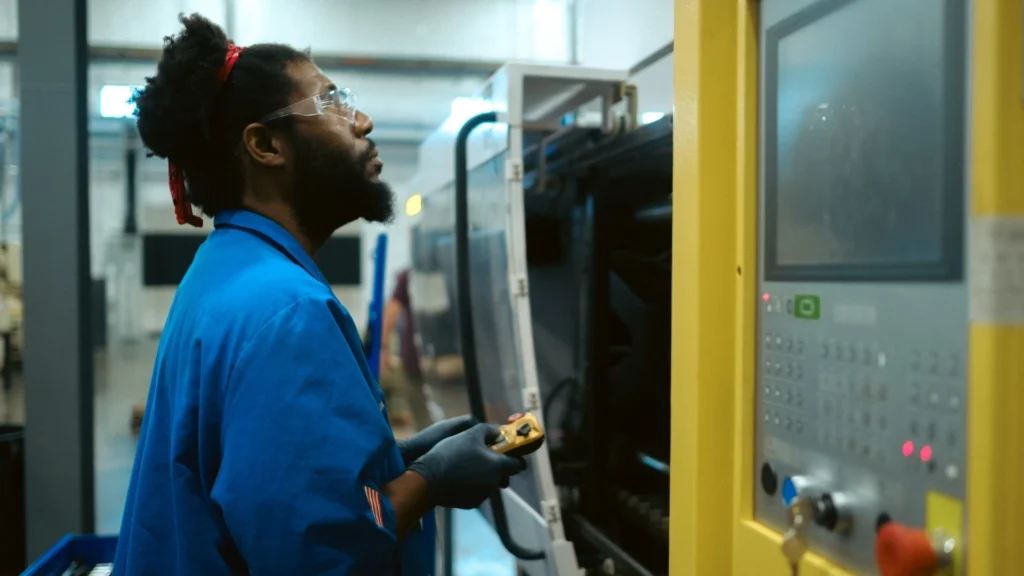
Rapid injection molding delivers real injection molded plastic parts in days to weeks, often making molded parts available earlier than full production steel tooling. It uses the same injection molding process and the same thermoplastic materials as production molding, but the tooling is made faster — typically from aluminum rather than hardened steel — by simplifying tool design, reducing cavity count, and compressing the manufacturing timeline.
The result is injection molded parts with real material properties, real surface finish, and real dimensional repeatability, available early enough to validate designs, bridge production gaps, and support product launches that cannot wait for full production tooling.
How Rapid Injection Molding Works
The rapid injection molding process is mechanically identical to standard injection molding. Plastic pellets are melted in a barrel, injected under pressure into a mold cavity, cooled, and ejected. The difference is in the tooling:
- Aluminum molds instead of hardened steel: Aluminum machines faster than steel, which can reduce tool build time from the typical 6–8 weeks required for many production steel tools after design approval to roughly 2–5 weeks for appropriate rapid tooling applications. Very complex steel tools, especially multi-cavity molds with side actions, tight tolerances, or advanced cooling requirements, may take longer.
- Single-cavity tools: Eliminating the complexity of balanced multi-cavity systems reduces design and machining time.
- Simplified features: Some undercuts, side actions, and complex cooling configurations are simplified or eliminated to accelerate tooling.
- Standard mold bases: Using pre-machined mold base components further reduces lead time.
These simplifications come with tradeoffs in tool life, cycle time, and part complexity, which is why rapid tooling is a bridge, not a permanent production solution, for most programs.
Rapid Tooling Is a Speed Strategy
Rapid injection molding is most valuable when the project needs real molded parts before full production tooling is ready. It is not simply a cheaper version of production tooling. It is a faster tooling approach with specific tradeoffs in complexity, tool life, and production throughput.
When Rapid Injection Molding Makes Sense
Rapid injection molding can be useful when a project needs production-intent molded parts but cannot wait for full production tooling. Common use cases include:
- Design validation before production tooling is committed: Getting real molded parts to test before cutting expensive steel.
- Bridge production while production tooling is being built: Keeping product available during the tooling lead time.
- Low-volume production programs: Supporting programs where full production tooling cannot be justified by the annual volume.
- Short-run orders with no ongoing production requirement: Producing a single build of a few thousand parts when long-term tooling is not needed.
- New product launches under deadline pressure: Supporting time-sensitive launches where time-to-market is the primary constraint.
Rapid vs. Production Tooling Compared
Both rapid injection molding and production injection molding use the same basic molding process, but the tooling strategy is different. Rapid tooling prioritizes speed and flexibility. Production tooling prioritizes long-term durability, process optimization, higher cavitation, and repeatable high-volume output.
| Category | Rapid Injection Molding | Production Tooling |
|---|---|---|
| Tooling Material | Typically aluminum, such as 7075 or QC-10. | Typically P20, H13, or other production-grade steel, depending on application requirements. |
| Lead Time | Often 2–5 weeks, depending on part complexity, mold design, and project requirements. | Commonly 6–8 weeks after approved design for many tools; longer for complex, multi-cavity, or highly engineered steel molds. |
| Tool Life | Often 5,000–50,000 shots depending on material, part geometry, tolerance requirements, and tool design. | Often 500,000–1,000,000+ shots when properly designed, built, and maintained for production use. |
| Cavity Count | Typically single-cavity or low-cavitation tooling. | Can include 2, 4, 8, 16, or more cavities for higher-volume programs. |
| Cost | Rapid tooling typically costs less than equivalent production tooling because the mold design is simplified and the tool is built for speed. | Higher upfront investment, but better long-term economics for repeat production and high-volume programs. |
| Cycle Time | Often longer because aluminum tooling, simplified cooling, and single-cavity layouts can limit throughput. | Optimized for minimum cycle time, repeatability, and production efficiency. |
| Part Quality | Uses the same materials and process as production molding, but dimensional tolerances may be slightly wider because of tool simplifications. | Designed for tight process control, repeatability, and long-term production performance. |
Tooling Lead Time Depends on Complexity
Many production steel tools can be completed in roughly 6–8 weeks after design approval. Longer timelines are more common when the mold requires multiple cavities, side actions, complex cooling, tight tolerances, or other advanced tooling features.
Materials Available in Rapid Injection Molding
Rapid injection molding is not limited to simple materials. The process can run the full range of engineering thermoplastics, depending on the application, mold design, and processing requirements.
- Commodity plastics: PP, ABS, HDPE, and LDPE
- Engineering grades: PC, nylon, Delrin or POM, PBT, and PEI
- High-performance materials: PEEK, PPS, and LCP, subject to mold temperature requirements
- Elastomers: TPE and TPU for overmolded or stand-alone flexible parts
- Filled grades: Glass-filled, mineral-filled, and carbon-fiber-filled materials
The material used in rapid injection molding is the same resin that will run in production, which is why rapid parts provide meaningful validation data. Parts from 3D printing or urethane casting use different materials and cannot fully replicate the mechanical properties, shrinkage behavior, or surface finish of an injection molded production part.
Rapid Injection Molding vs. 3D Printing
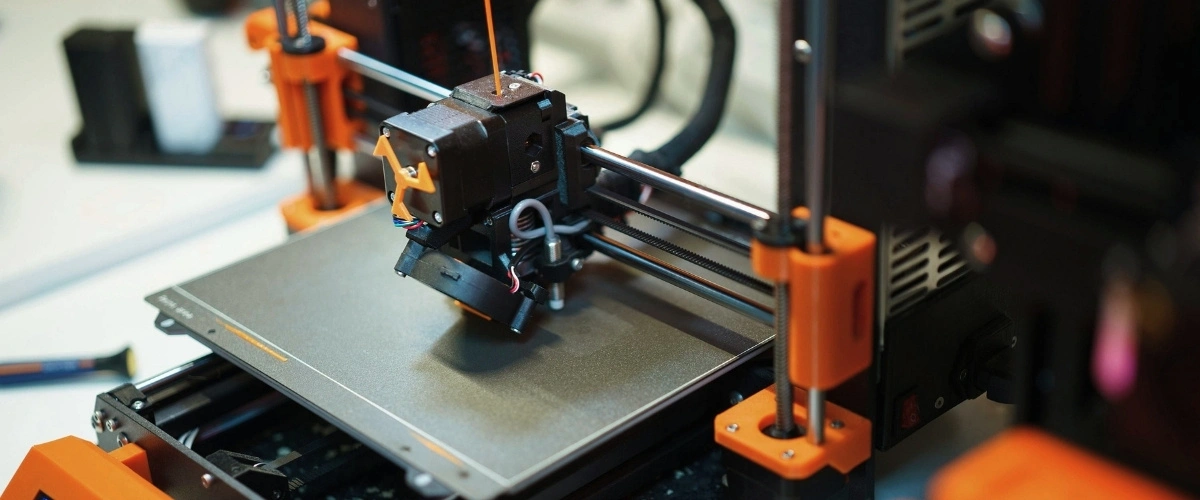
Rapid injection molding is sometimes grouped with 3D printing because both can support faster product development. However, they are fundamentally different processes.
3D printing builds parts additively, layer by layer, without a mold. It can be useful for early prototypes, form studies, and quick design iteration. Rapid injection molding, by contrast, produces real molded parts using injection molding resin, injection pressure, mold cooling, and part ejection.
That distinction matters when the goal is to validate how the final part will perform. Injection molded parts have different strength characteristics, surface finish, shrinkage behavior, and dimensional repeatability than most printed parts.
Limitations of Rapid Injection Molding
Rapid injection molding is valuable, but it is not the right fit for every program. The same tooling choices that make it faster can also create limitations.
- Tool life is lower: Aluminum tools generally do not last as long as hardened steel production tools.
- Complex geometry may need simplification: Side actions, undercuts, tight tolerances, and complex cooling may increase cost or lead time.
- Higher-volume programs may outgrow the tool: Rapid tooling can support validation, bridging, or short-run production, but it may not be economical for sustained high-volume production.
- Abrasive materials can accelerate wear: Glass-filled and other reinforced resins can wear aluminum tooling faster than unfilled materials.
Best Use Case
Rapid injection molding is strongest when a project needs real molded parts quickly, but the long-term production plan still calls for dedicated production tooling once the design, demand, and manufacturing requirements are confirmed.
Frequently Asked Questions
How fast is rapid injection molding?
Aluminum tooling for a simple to moderate-complexity part can be ready in 2–4 weeks from approved design. More complex tools with side actions or tight tolerances typically take 4–6 weeks. This compares to many production steel tools, which are commonly built in 6–8 weeks after design approval, though complex multi-cavity tools or highly engineered molds can extend beyond that range.
How many parts can a rapid injection mold produce?
An aluminum rapid tool typically produces 5,000–50,000 shots before wear becomes an issue. The exact number depends on the abrasiveness of the material, the part geometry, and the required tolerance band. Glass-filled resins wear aluminum faster than non-abrasive materials. Some aluminum tools can run 100,000+ shots for non-abrasive resins with relaxed tolerances.
Is rapid injection molding the same as 3D printing?
No. Rapid injection molding is real injection molding with real thermoplastic materials, just with faster-to-produce tooling. 3D printing builds parts additively, without a mold. The materials, mechanical properties, surface finish, and dimensional characteristics of injection molded parts are fundamentally different from 3D printed parts.
When should a company choose rapid injection molding?
Rapid injection molding is a good fit when a company needs real molded parts for design validation, bridge production, low-volume production, short-run orders, or deadline-driven product launches. It is especially useful when the project needs production-intent parts before full production tooling is complete.
Is rapid injection molding only for prototype parts?
No. Rapid injection molding is often used for prototypes and design validation, but it can also support bridge production, pilot runs, low-volume production, and short-run programs. The right application depends on expected volume, resin selection, tolerance requirements, and how long the tool needs to last.