A practical guide to polybutylene terephthalate (PBT), including its properties, applications, advantages, limitations, and injection molding considerations.
Electrical connectors and precision components require materials that maintain their dimensions and performance under demanding conditions. Polybutylene terephthalate (PBT) is an engineering thermoplastic often selected for its electrical insulation, low moisture absorption, and dimensional stability.
This guide explains how PBT performs, where it is commonly used, and what engineers and buyers should consider when evaluating it for injection molded parts.
What Is PBT?
Polybutylene terephthalate (PBT) is a semi-crystalline engineering thermoplastic polyester known for its dimensional stability, electrical insulating properties, and chemical resistance. It is commonly used in electrical connectors, automotive components, and precision molded parts.
PBT crystallizes relatively quickly during cooling, allowing for efficient injection molding cycles. Its low moisture absorption also helps molded parts maintain consistent dimensions and electrical properties in humid environments.
PBT belongs to the same polyester family as polyethylene terephthalate (PET). However, PBT is generally easier to process into intricate injection molded components, while PET is widely used in packaging, fibers, and certain engineering applications.
Properties of PBT
PBT combines electrical insulation, chemical resistance, and dimensional stability, making it suitable for applications where consistent performance and precise part geometry are important.
Its properties vary by formulation. Glass-filled grades offer greater stiffness and heat resistance, while specialty grades can provide improved impact strength, flame resistance, or hydrolysis resistance.
| Property | Characteristic | Design Consideration |
|---|---|---|
| Dimensional Stability | Very good | Low moisture absorption helps maintain tight tolerances. |
| Electrical Properties | Excellent insulation | Well suited for connectors and electrical components. |
| Chemical Resistance | Good | Resists many oils, fuels, and chemicals, depending on exposure conditions. |
| Moisture Absorption | Low | More dimensionally stable in humidity than many common nylon grades. |
| Heat Resistance | Good; improves with reinforcement | Allowable service temperature depends on grade, loading, and exposure duration. |
| Crystallization | Relatively fast | Supports efficient molding cycles. |
| Mechanical Strength | Good; higher with reinforcement | Glass fibers improve stiffness and strength. |
PBT vs. Nylon for Electrical Connectors
PBT and nylon are both widely used engineering thermoplastics, but they behave differently when exposed to moisture.
Compared with common nylon grades such as PA 6 and PA 6/6, PBT absorbs significantly less moisture. This helps it maintain more consistent dimensions and electrical properties in humid environments.
For electrical connectors with tight dimensional requirements, this stability can make PBT a strong alternative to nylon. However, the final choice also depends on strength, toughness, temperature exposure, and the specific resin grade.
Advantages of PBT
PBT offers several benefits for injection molded components, particularly where dimensional consistency, electrical insulation, and production efficiency are priorities.
- Excellent dimensional stability: Low moisture absorption helps parts maintain their dimensions across changing humidity conditions.
- Strong electrical insulation: Suitable for connectors, sockets, switches, and other electrical components.
- Good chemical resistance: Resists many oils, fuels, greases, and chemicals encountered in automotive and industrial environments.
- Efficient injection molding: Relatively fast crystallization supports shorter cooling times and productive molding cycles.
- Improved performance with reinforcement: Glass-filled grades provide greater stiffness, strength, and heat resistance for demanding applications.
Limitations of PBT
Despite its advantages, PBT has limitations that engineers should account for when selecting a material and designing a molded part.
- Notch sensitivity: Sharp corners and stress concentrations can increase the risk of cracking, particularly in formulations with limited impact toughness.
- Shrinkage and warpage: PBT shrinks as it cools and crystallizes. Glass-filled grades can experience uneven shrinkage due to fiber orientation, potentially causing warpage.
- Hydrolytic degradation: Prolonged exposure to high temperatures and moisture can degrade standard PBT. Hydrolysis-resistant grades are available for more demanding environments.
- Limited unfilled stiffness: Applications requiring high structural rigidity may need glass-filled or otherwise reinforced formulations.
These limitations do not necessarily rule out PBT. Instead, they highlight the importance of selecting the appropriate grade and accounting for its processing characteristics during part and mold design.
What Products Are Made from PBT?
PBT is used across industries that require reliable electrical insulation, chemical resistance, and dimensional stability. Its applications range from small connector housings to automotive and industrial components.
| Industry | Typical PBT Applications |
|---|---|
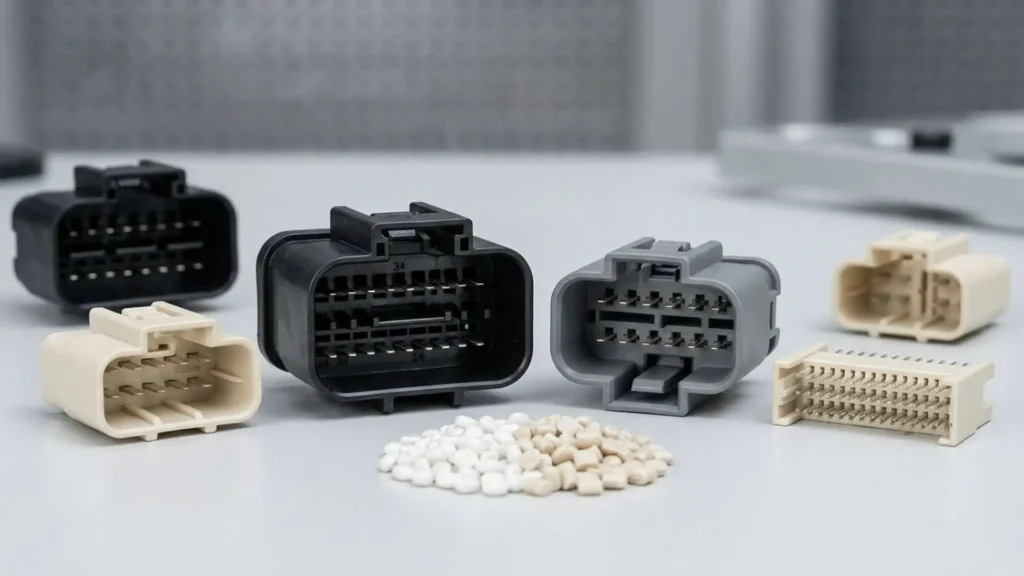
| Electrical & Electronics | Connectors, sockets, switches, and electrical housings |
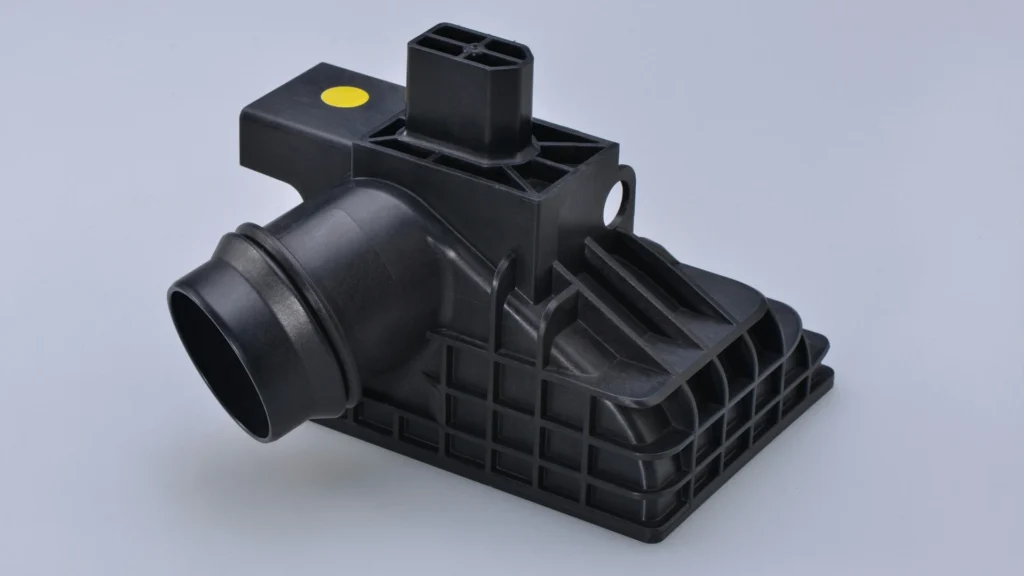
| Automotive | Sensor housings, ignition components, and connector systems |
| Appliances | Housings and components located near motors or heat sources |
| Industrial | Precision mechanical components, electrical insulators, and equipment housings |
| Consumer Products | Durable housings and mechanical components |
PBT is particularly useful for electrical components because it combines insulating performance with relatively low moisture absorption. Glass-filled and specialty formulations extend its use to applications requiring greater stiffness, heat resistance, or dimensional control.
PBT in Injection Molding
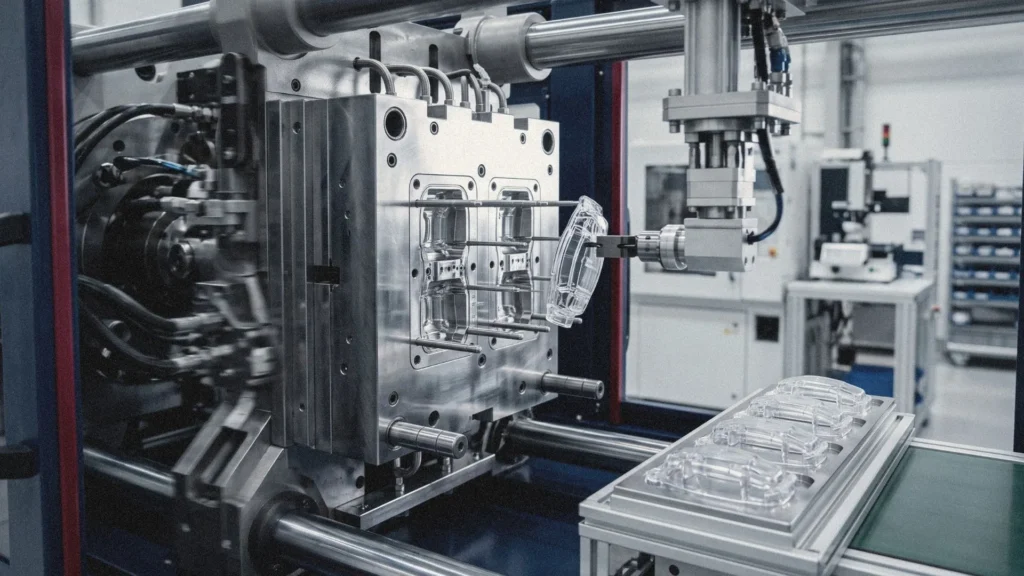
PBT is well suited for injection molding because it flows into detailed mold cavities and crystallizes relatively quickly during cooling. These characteristics support efficient production of intricate parts such as electrical connectors and precision housings.
However, successful PBT molding requires careful control of material drying, shrinkage, and processing conditions.
Material Drying
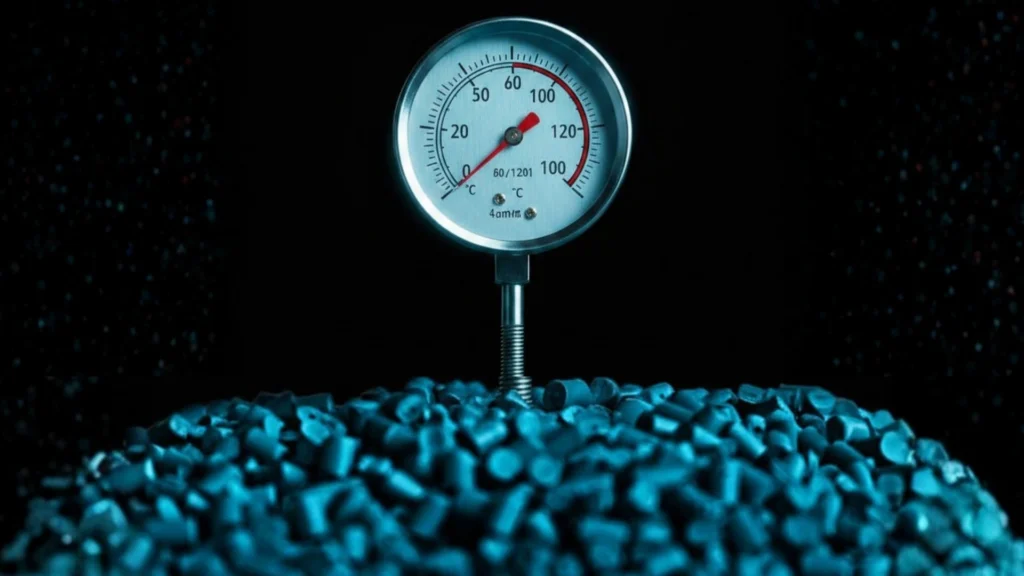
PBT must be properly dried before injection molding. Although finished PBT parts absorb relatively little moisture during normal service, moisture in the resin during melt processing can cause hydrolytic degradation.
This degradation reduces molecular weight and can weaken the finished component. Drying conditions and acceptable moisture levels should follow the specific resin supplier’s recommendations.
Shrinkage and Warpage
PBT is a semi-crystalline polymer, so shrinkage occurs as the material cools and solidifies. The amount of shrinkage depends on the grade, part geometry, and processing conditions.
Glass-filled PBT generally exhibits lower shrinkage in the direction of fiber alignment than across it. This difference can cause warpage, particularly in thin or complex components.
Proper gate placement, wall thickness, cooling, and mold design help control these effects and improve dimensional consistency.
Grade Selection
PBT is available in unfilled, glass-filled, flame-retardant, impact-modified, and hydrolysis-resistant formulations.
The appropriate grade depends on the component’s mechanical requirements, operating temperature, electrical specifications, chemical exposure, and expected service life.
PBT is also available in blends with polycarbonate (PC/PBT). These formulations combine characteristics of both polymers and can provide improved toughness while retaining useful chemical resistance.
For additional guidance on evaluating engineering thermoplastics, see our Injection Molding Material Selection Guide.
Frequently Asked Questions
What is the difference between PBT and PET?
PBT and PET are both thermoplastic polyesters, but they differ in their processing characteristics and typical applications.
PBT generally crystallizes faster and is commonly used for injection molded engineering components such as connectors and housings. PET is widely used in packaging, fibers, and engineered components. Its optical clarity depends on the grade and degree of crystallinity.
Why is PBT used for electrical connectors?
PBT offers excellent electrical insulation, low moisture absorption, and good dimensional stability.
These properties help connector housings maintain consistent dimensions and electrical performance under changing environmental conditions. Reinforced and flame-retardant grades are also available for applications with additional mechanical or safety requirements.
Is PBT stronger than nylon?
Neither material is universally stronger. Mechanical properties depend on the specific nylon and PBT grades, including their reinforcement levels.
Some glass-filled nylon grades provide greater mechanical strength, while PBT generally absorbs less moisture than common nylon grades such as PA 6 and PA 6/6.
For applications requiring dimensional stability in humid environments, PBT may be the better choice. However, engineers should compare the specific grades against the part’s mechanical and environmental requirements.
Does PBT need to be dried before molding?
Yes. PBT must be properly dried before injection molding because moisture can cause hydrolytic degradation during melt processing.
Excessive moisture can reduce molecular weight and compromise the mechanical properties of the finished component. Drying temperatures, times, and moisture limits should follow the resin manufacturer’s recommendations.
Choosing the Right Material for Your Part
PBT is a strong candidate for injection molded components that require electrical insulation, dimensional stability, and resistance to common automotive or industrial chemicals. However, it is not the right material for every application.
Material selection should account for mechanical loads, operating temperature, moisture exposure, chemical compatibility, electrical requirements, and production cost. Reinforcement and specialty additives can improve certain properties, but they may also affect shrinkage, toughness, or processing behavior.
Before investing in tooling, engineers should evaluate the selected resin alongside the part geometry through a design-for-manufacturability (DFM) review. Addressing material limitations and molding requirements early helps reduce tooling changes, improve part consistency, and control production costs.