How the number of mold cavities affects tooling cost, production output, part consistency, and when to choose each mold type.
A mold cavity is the shaped space that forms an injection molded part. The number of cavities determines how many parts a tool can produce during each molding cycle.
This decision affects tooling investment, per-part cost, production capacity, and consistency. Matching cavity count to projected production volume is one of the most important considerations in injection molding economics.
What Is a Mold Cavity?
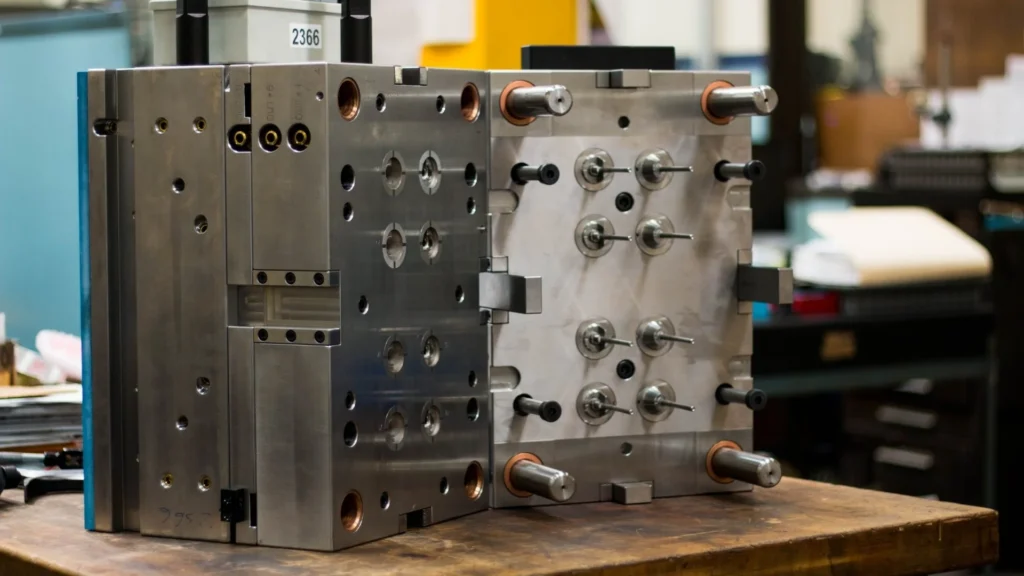
A mold cavity is the space within an injection mold that molten plastic fills to create a part.
A mold may contain a single cavity, producing one part per molding cycle, or multiple cavities, producing several parts during the same cycle.
The number of cavities is typically established during the initial mold design based on projected production volume, part size, and manufacturing requirements. Because changing cavity count often requires significant tooling modifications, it is important to make this decision before manufacturing the mold.
Single-Cavity Molds
A single-cavity mold produces one part per injection molding cycle. It is generally the simplest and least expensive type of mold to build.
Single-cavity molds are commonly used for prototypes, low-volume production, and large components where multiple cavities may not be practical.
The primary advantage is lower upfront tooling cost. However, producing only one part per cycle limits throughput. As production volume increases, this can result in a higher manufacturing cost per part compared with multi-cavity tooling.
Multi-Cavity Molds
A multi-cavity mold contains several cavities that produce identical parts during each molding cycle. Common configurations include 2, 4, 8, 16, or more cavities.
These molds require a greater initial tooling investment but can significantly reduce per-part manufacturing costs at higher production volumes.
How the Economics Work
A multi-cavity mold produces multiple parts during a single shot. As a result, machine time and associated processing costs are distributed across more finished components.
For example, a four-cavity mold produces four parts per cycle instead of one. Although the mold costs more to manufacture, the additional output can reduce the cost per part when production volumes justify the investment.
Over a sufficiently large production run, these savings can offset the higher tooling cost.
The Engineering Challenge
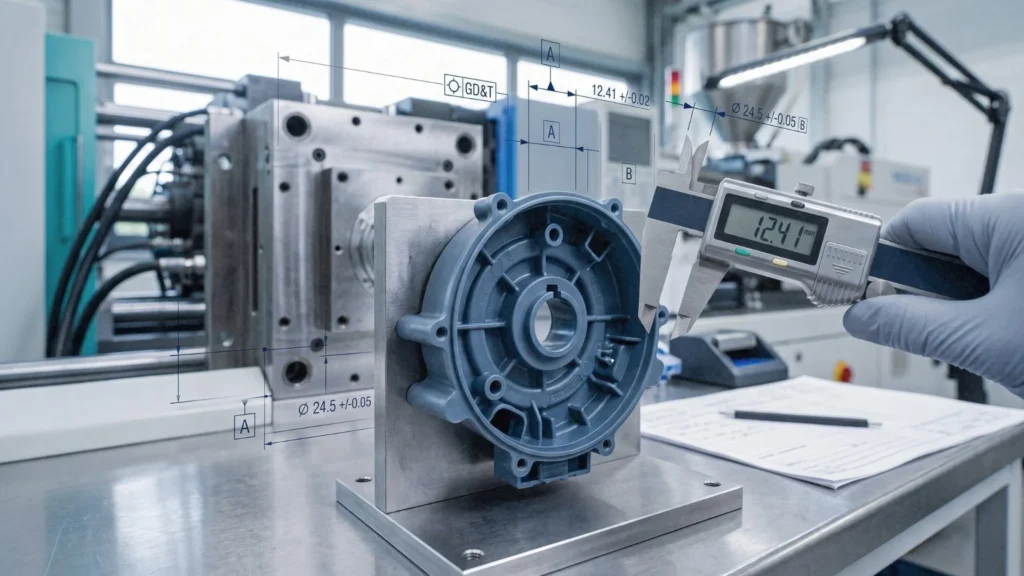
Multi-cavity molds require balanced filling to achieve consistent part quality. Each cavity must receive an appropriate amount of molten plastic under controlled filling and packing conditions.
Variations in flow, pressure, or cooling between cavities can cause dimensional differences and other quality problems.
As cavity count increases, tooling complexity also increases. Larger molds may require greater clamping force, higher shot capacity, more sophisticated runner systems, and additional process control.
Family Molds
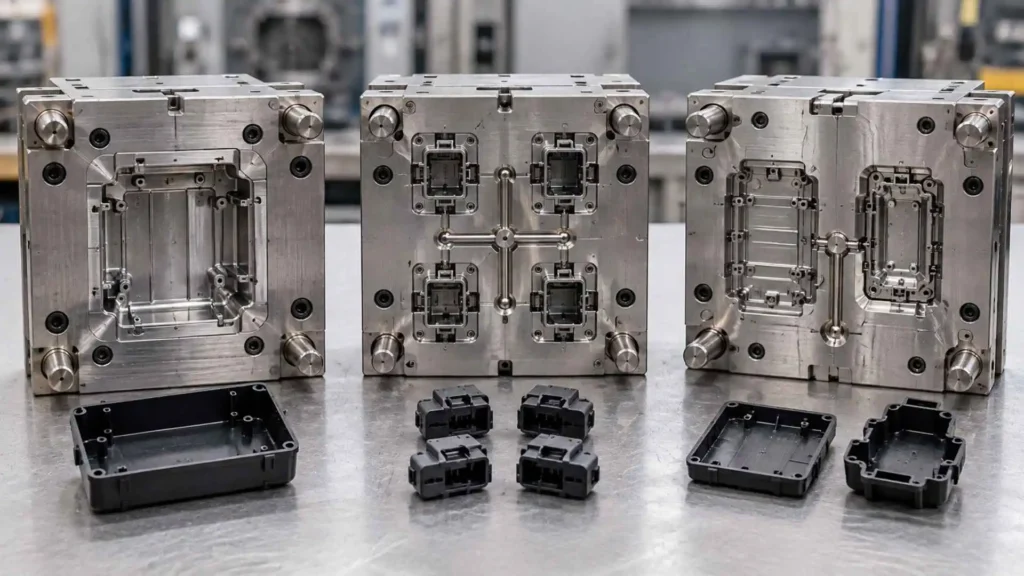
A family mold produces different parts within the same tool rather than multiple copies of one identical part.
For example, a family mold may contain separate cavities for the top and bottom halves of a plastic housing. Both components are manufactured during the same molding cycle.
This approach can reduce tooling investment when different components are needed in matched quantities and have compatible material and processing requirements.
Limitations of Family Molds
Family molds introduce additional manufacturing considerations because the parts may differ in size, geometry, and material flow requirements.
- Fill balancing: Different cavity sizes and geometries make it more challenging to distribute molten plastic evenly.
- Production flexibility: Parts typically run together, making it difficult to produce one component independently when demand changes.
Family molds are most practical when the components are consistently required in similar quantities and can be manufactured under compatible processing conditions.
Choosing the Right Cavity Count
The appropriate mold configuration depends primarily on production volume, part requirements, and the balance between upfront tooling investment and long-term manufacturing cost.
| Mold Type | Best For | Primary Trade-Off |
|---|---|---|
| Single-Cavity | Prototypes, low-volume production, and large parts | Higher cost per part at large production volumes |
| Multi-Cavity | High-volume production of identical components | Higher tooling investment and more complex fill balancing |
| Family Mold | Matched components required in similar quantities | More challenging fill balancing and reduced flexibility to produce parts independently |
Production volume is a major factor in selecting cavity count. As projected volume increases, additional cavities become easier to justify because the higher tooling investment can be recovered through lower per-part production costs.
However, cavity count should be evaluated alongside part size, mold complexity, equipment requirements, and production consistency.
An injection molding manufacturer can compare tooling configurations and estimate the production volume at which additional cavities become cost-effective.
Texas Injection Molding evaluates cavity count based on each customer’s projected production requirements, helping balance initial tooling investment with long-term manufacturing economics.
Frequently Asked Questions
What is a multi-cavity mold?
A multi-cavity mold contains more than one cavity and produces several identical parts during each injection molding cycle.
Although it generally costs more to manufacture than a single-cavity mold, it can reduce the cost per part at higher production volumes by distributing machine time across multiple components.
What’s the difference between a multi-cavity and a family mold?
A multi-cavity mold produces multiple copies of the same component, while a family mold produces different components within one tool.
Family molds are useful for matched sets of parts, but differences in cavity geometry can make fill balancing more challenging.
How many cavities should my mold have?
The appropriate cavity count depends largely on projected production volume, part size, and manufacturing requirements.
Lower volumes often favor single-cavity tooling because of the lower upfront investment. Higher volumes may justify additional cavities to reduce per-part costs.
A molder can evaluate different configurations to determine when the additional tooling investment becomes cost-effective.
What is fill balance in injection molding?
Fill balance refers to the consistent distribution of molten plastic across multiple mold cavities.
Proper runner and gate design helps ensure that each cavity fills under similar conditions, supporting consistent dimensions and part quality.
Maintaining fill balance generally becomes more challenging as cavity count and tooling complexity increase.