
A practical guide for engineers, product teams, and purchasing professionals specifying polycarbonate injection molded parts.
Polycarbonate, an amorphous engineering polymer and often abbreviated as PC, is one of the most widely used engineering thermoplastics in precision plastic manufacturing. It is valued for a combination of properties that few plastics match at the same time: exceptional impact strength and resistance, high optical clarity comparable to glass, dimensional stability, and reliable heat performance at elevated temperature levels.
Polycarbonate is the material behind safety eyewear lenses, automotive headlamp housings, medical device covers, electronic enclosure glazing, lighting components, and protective equipment. It is an ideal choice when a molded plastic part needs to be clear, tough, dimensionally stable, and capable of handling demanding service conditions across every major industry.
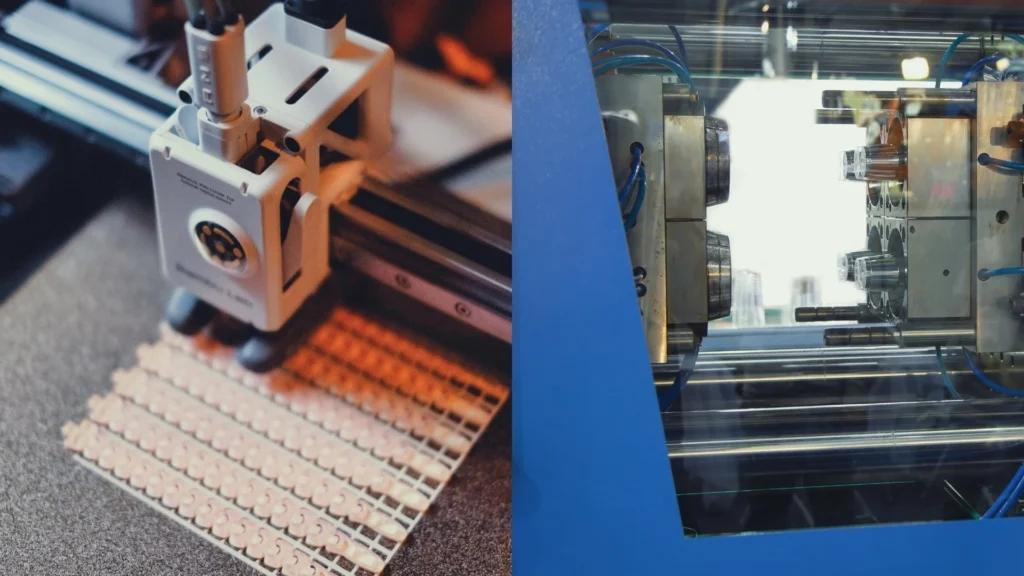
However, PC is not as forgiving to process as common commodity plastics such as ABS or polypropylene. Successful polycarbonate injection molding requires proper drying, controlled melt temperature, appropriate mold temperature, careful gate placement, and part geometry that minimizes molded-in stress. During early stage prototyping—including 3D printing or low-volume test runs—designers must account for these factors before scaling up to full production of commercial products.
Understanding how polycarbonate processes — and the design rules it requires to make complex parts — is essential for anyone specifying PC for a precision injection molded part.
Key Properties of Polycarbonate Polymer
Polycarbonate is frequently chosen when a molded part needs impact resistance, glass-like clarity, and dimensional performance in one material. The table below summarizes the properties that make PC useful in engineering applications, along with the design considerations that come with them.
| Property | Typical Performance | Design Consideration |
|---|---|---|
| Impact Strength | Among the highest of any transparent polymer thermoplastic. PC is nearly unbreakable under many normal service conditions. | Well suited for protective covers, safety components, lenses, housings, and impact-resistant enclosures. |
| Optical Clarity | Transparent grades transmit approximately 88–90% of visible light, serving as an ideal substitute for glass. | Requires proper drying, polished mold surfaces, controlled gating, and stable processing to maintain clarity. |
| Heat Resistance | Heat deflection temperature is commonly around 125–140°C at 1.8 MPa, depending on grade. | Appropriate for many engineering environments where commodity plastics may soften or deform under high temperature. |
| Dimensional Stability | Low mold shrinkage, typically around 0.5–0.7%, with good creep resistance. | Supports complex molded parts that need stable dimensions across thermal cycles and service conditions. |
| Chemical Resistance | Vulnerable to strong alkalis, aromatic solvents, and some cleaning agents. | Chemical exposure should be reviewed carefully, especially in medical, industrial, and cleaning-intensive applications. |
| Flame Rating | Many grades are available with UL 94 V-0 or V-2 ratings. | Grade selection should be based on the flame, regulatory, and end-use requirements of the industry application. |
Polycarbonate Is Strong, But Not Indestructible
Polycarbonate has excellent bulk toughness, but it is notch-sensitive and vulnerable to stress-assisted chemical attack. Sharp inside corners, molded-in stress, aggressive cleaners, and certain solvents can cause cracking even in otherwise strong PC parts.
Processing Polycarbonate: What Makes It Demanding
Polycarbonate injection molding requires more careful process control than many commodity plastics. The most common processing challenges are moisture sensitivity, high melt temperature, high injection pressure, and the need for elevated mold temperature using specialized equipment.
Moisture Sensitivity
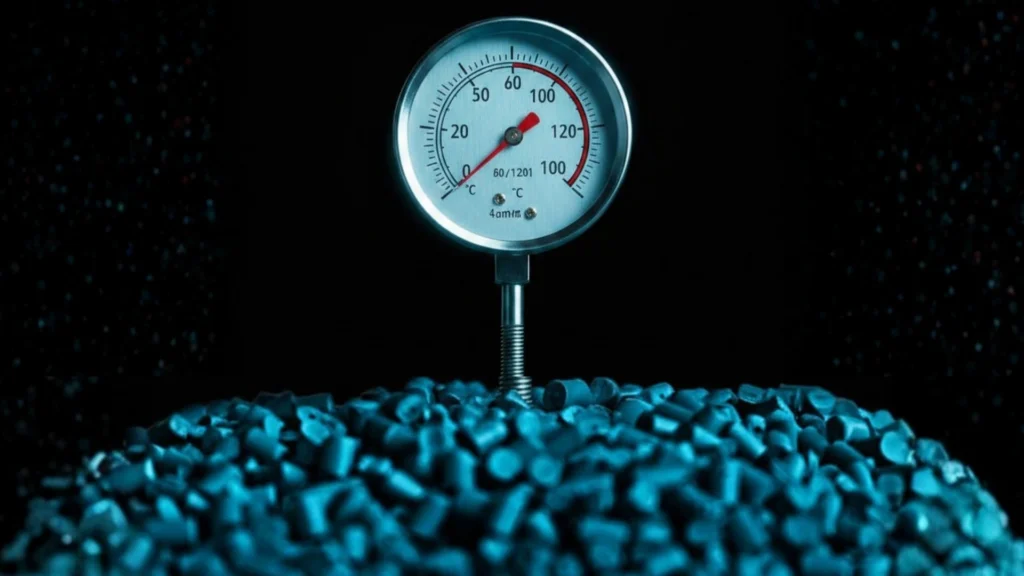
PC is hygroscopic, which means it absorbs moisture from the surrounding environment. Before molding, polycarbonate must be dried to a very low moisture level, often below 0.02%.
Wet PC can produce splay marks, bubbles, loss of clarity, surface defects, and severely reduced impact strength. A typical drying practice is 120°C for 4–6 hours in a desiccant dryer, though the resin supplier’s processing data sheet should always be followed to make sure the specific grade is properly prepared.
High Processing Temperature
Polycarbonate typically requires melt temperatures of 270–320°C, depending on the grade, part thickness, flow length, and application requirements. This is significantly higher than many common injection molding materials, including ABS and polypropylene.
High melt temperatures make residence time management important. If PC remains in the barrel too long, the material can degrade, discolor, or lose mechanical properties. Shot size, barrel capacity, cycle time, and purge procedures should be reviewed before production.
High Injection Pressure
Polycarbonate is a high-viscosity melt, especially in optical grades and thick-wall applications. Filling thin sections, long flow paths, or complex geometries may require high injection pressure and fast injection speeds.
This makes gate design, runner layout, and venting especially important. Poor tooling or process design can lead to short shots, burn marks, weld lines, jetting, or high molded-in stress.
Mold Temperature
Mold temperature for PC is also typically maintained around 80–100°C. Proper mold temperature helps improve surface finish, reduce internal stress, and prevent premature freezing in thin complex sections.
Cold molds can create parts with poor surface appearance and elevated internal stress. These parts may pass initial inspection but later crack during assembly, under load, or after exposure to certain chemicals.
Drying Is Not Optional
Improperly dried polycarbonate can lose the properties that make the material valuable in the first place. Splay, bubbles, brittleness, reduced impact strength, and poor optical clarity are often signs that moisture control was inadequate.
Design Guidelines for Polycarbonate Parts
Polycarbonate can produce strong, precise, and visually clear molded parts, but the part design must account for material flow, ejection, stress concentration, and cosmetic requirements to get optimal products.
- Wall thickness: A practical wall thickness range for many PC parts is 1.5–4.5 mm. Walls thinner than 1.5 mm can be difficult to fill without defects. Walls thicker than 4.5 mm can increase sink, cycle time, internal stress, and cooling challenges.
- Draft angles: Use a minimum of 1° draft on non-textured surfaces. More draft may be required for deep features, textured surfaces, or cosmetic areas that must eject cleanly.
- Corner radii: Use generous inside radii wherever possible. A minimum radius of 0.5× nominal wall thickness is a useful starting point. Sharp inside corners concentrate stress and increase the risk of cracking.
- Gate location: Gate into thicker sections and allow the material to flow toward thinner sections. Poor gate placement can create weak weld lines or visible flow defects.
- Weld line control: Weld lines in PC can be structurally weak, especially in high-load zones. Part design and gate location should minimize weld lines in structural areas.
- Transparent applications: Gate away from optically critical surfaces. Gate blush, jetting, weld lines, and flow marks are especially visible in clear polycarbonate parts.
- Assembly features: Snap fits, press fits, threaded inserts, and bosses should be designed to reduce localized stress. PC can crack if the design creates sharp stress risers or excessive interference.
Common Applications for Polycarbonate Injection Molding

Polycarbonate is used across industries where molded parts need a combination of toughness, clarity, dimensional stability, and heat performance. While some polycarbonate applications use sheet or extruded material instead of injection molded parts, they reflect the same core reasons engineers specify PC: impact resistance, light transmission, and durability.
- Optical applications: Eyewear lenses, automotive headlamp housings, light diffusers, optical instrument covers, and transparent protective windows as an alternative to glass.
- Medical applications: Device housings, infusion pump covers, diagnostic equipment panels, transparent covers, and protective medical equipment components.
- Electronics applications: Laptop and tablet enclosures, electrical connector housings, LED lighting covers, display covers, and protective device shells.
- Automotive applications: Interior trim, instrument clusters, sensor covers, glazing panels, and lighting components.
- Safety applications: Face shields, machine guards, impact-resistant covers, protective barriers, and equipment windows.
- Building and protective glazing applications: Greenhouse panels, equipment windows, protective glazing, and translucent barriers use polycarbonate for impact resistance, light transmission, and weatherable durability. These applications are often made from sheet or extruded PC rather than injection molded parts, but they demonstrate why polycarbonate is selected when clarity and toughness are both required.
Optical PC Requires Tooling and Process Discipline
Clear polycarbonate parts require more than a transparent resin grade. Mold polish, gate location, drying control, venting, flow balance, and processing stability all affect clarity and cosmetic performance.
Polycarbonate Blends: When to Consider PC/ABS
Polycarbonate is also frequently blended with ABS to create PC/ABS, a material that improves processability and reduces cost while retaining much of PC’s impact strength and heat resistance.
PC/ABS generally processes at lower temperatures than pure polycarbonate, shows less notch sensitivity, and can be easier to mold in complex geometries. It is commonly used for consumer electronics enclosures, automotive interior parts, business equipment housings, and industrial covers where optical clarity is not required.
Pure polycarbonate is usually preferred when the application requires transparency, maximum impact strength, or higher heat performance. PC/ABS is often a better choice when the part needs a balance of toughness, moldability, cost control, and cosmetic appearance.
| Material | Best Fit | Common Tradeoff |
|---|---|---|
| Polycarbonate | Transparent, high-impact, heat-resistant, and dimensionally stable parts. | More demanding to dry, process, and design around stress concentration. |
| PC/ABS | Opaque housings, enclosures, covers, and structural cosmetic parts. | Lower optical clarity and typically lower heat resistance than pure PC. |
Frequently Asked Questions
Is polycarbonate stronger than ABS?
In impact resistance, yes. Polycarbonate significantly outperforms ABS and can absorb impacts that may crack or shatter ABS. However, ABS is often more forgiving of sharp corners, snap-fit features, and some design imperfections. For applications requiring maximum impact resistance, PC or PC/ABS blends are often the better material choices.
Can polycarbonate be injection molded in transparent grades?
Yes. Polycarbonate is naturally transparent and can provide approximately 88–90% visible light transmission in clear grades. Optical clarity depends on the resin grade, drying control, mold polish, gate location, venting, and process consistency. For optical surfaces, polished tooling such as SPI A-1 or A-2 may be required.
Why does polycarbonate crack?
Polycarbonate usually cracks because of environmental stress cracking, sharp internal corners, excessive molded-in stress, or high assembly stress. Solvents, aggressive cleaners, certain lubricants, and strong alkalis can also contribute to cracking, especially when the part is under load.
What wall thickness is best for polycarbonate injection molded parts?
Many polycarbonate parts are designed with wall thicknesses between 1.5 mm and 4.5 mm. The best wall thickness depends on part size, flow length, cosmetic requirements, structural loads, and the specific PC grade. Uniform wall thickness is important to reduce sink, warpage, and molded-in stress.
Is polycarbonate suitable for medical device housings?
Yes, polycarbonate is commonly used in the medical industry for device housings, covers, and transparent components. Final material selection should account for sterilization method, chemical exposure, regulatory requirements, impact requirements, and the specific medical-grade resin being considered.
When should I choose PC/ABS instead of polycarbonate?
PC/ABS is often a better choice when the part does not need glass-like optical clarity and the project requires improved moldability, lower cost, good impact strength, and a cosmetic surface finish. Pure polycarbonate is usually preferred when transparency, maximum impact strength, or higher heat performance is required.