In the world of manufacturing, few processes are as versatile or efficient as plastic injection molding. However, the quality, cost, and lead time of your final product are determined long before the first shot of plastic hits the mold. Whether you are an engineer or a product designer, your upfront design choices can make or break a project.
“You want to make sure that you end up with the best possible part you can and don’t get into a bad tooling situation,” explains Jason Mann in a recent episode of Tim Talks.
If you want to avoid costly redesigns and manufacturing headaches, understanding the fundamental physics of plastic molding is non-negotiable. Here are the critical design considerations to keep in mind to ensure your part is both functional and manufacturable.
Design for Manufacturability Starts Early
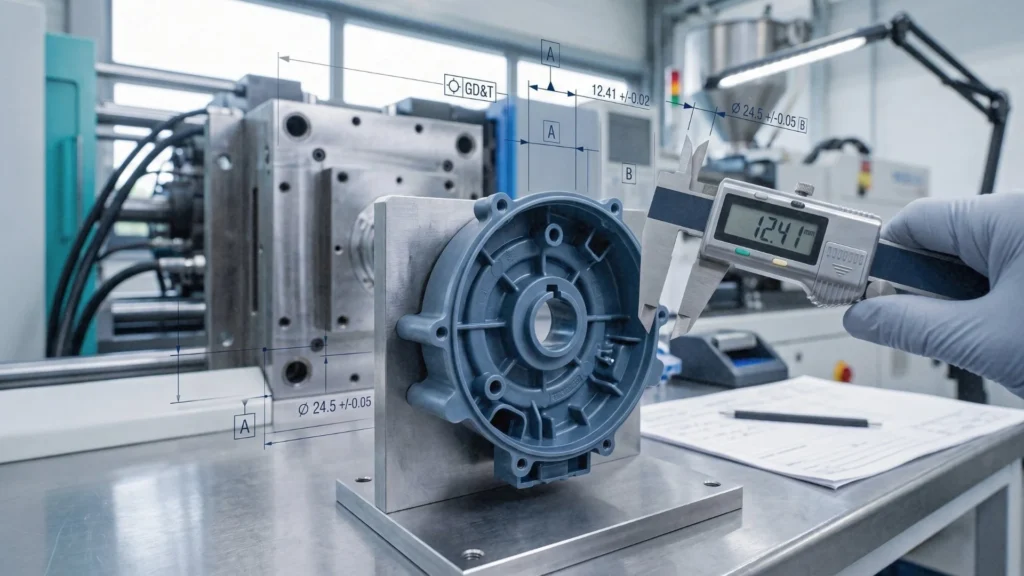
The best injection molded parts are designed with tooling, material flow, cooling, ejection, shrinkage, and final part performance in mind before mold construction begins.
Essential Design Considerations for Plastic Injection Molding
1. Optimize Your Parting Line
The parting line—where the two halves of the mold meet—is one of the first things you should define. Ideally, you want to position it in an area that is not aesthetically displeasing. Placing it poorly can ruin the finish of an otherwise perfect product, so plan this location early in your CAD design to avoid visible, unwanted seams.
2. Eliminate Undercuts Where Possible
An undercut is a feature that prevents a part from being ejected from the mold in a simple “straight pull,” meaning the mold opens and closes without additional side action. While you can use slides or complicated tooling to accommodate undercuts, these mechanisms increase the complexity, cost, and lead time of your tool.
Whenever possible, design your geometry to avoid trapped steel conditions to keep production efficient and cost-effective.
3. Don’t Forget the Draft
Draft is the slight taper you add to the walls of a part to ensure it releases easily from the mold. A common rule of thumb is about one degree of draft per linear inch in the direction of the draw.
Jason Mann warns that designers often overlook this until it’s too late. Remember that the deeper your texture, the more draft you may need. Failing to account for draft at the front end of your project is a recipe for sticking parts and damaged tooling.
4. Maintain Uniform Wall Thickness
Uniform wall thickness is crucial for the structural integrity and cosmetic appeal of your part. When you transition from thick to thin sections, you disrupt the material’s ability to flow effectively through the mold.
This often leads to “sink marks”—depressions in the surface of the plastic that occur as it cools—and can create inconsistent performance across the part.
5. Master Boss and Rib Design
Bosses, which are commonly used for inserts and screws, and ribs, which are used for structural support, are essential design elements. However, they come with strict limitations.
To avoid visible sink marks on the exterior of your part, the diameter of these features should generally be kept to less than 60% of your outer wall thickness. Proper placement and sizing here are the difference between a high-quality part and a cosmetic failure.
6. Use Radii, Not Sharp Corners
Nature doesn’t have sharp edges, and your plastic parts shouldn’t either. Sharp corners create stress concentration points.
Adding radii wherever possible—similar to how a tree branch meets the trunk—significantly enhances the strength of your part and improves the flow of material as it fills the mold.
7. Plan for Shrink and Venting
Plastics are dynamic materials; they shrink as they cool. Understanding the correct shrink rates for your specific material is vital during the mold-building phase.
Furthermore, you must account for venting. Gases trapped in the mold at the front of the plastic flow need a place to escape. If they don’t, you run the risk of cosmetic defects, knit lines, where two flow fronts meet, or weld lines.
A well-vented tool ensures the plastic fills completely and cleanly, leading to a stronger, better-looking product.
Tooling Risk Reminder
Poor parting line placement, undercuts, insufficient draft, thick wall sections, and sharp internal corners can all increase tooling complexity, production cost, cosmetic defects, and lead time.
Injection Molding Design Considerations Comparison
Each design decision affects manufacturability, part quality, tooling complexity, and long-term production performance.
| Design Consideration | Why It Matters | Common Risk If Ignored | Best Practice |
|---|---|---|---|
| Parting Line | Determines where the mold halves meet and where a seam may appear. | Visible cosmetic seams or poor part appearance. | Place the parting line in a less visible or less critical area whenever possible. |
| Undercuts | Affect whether the part can be ejected with a simple straight-pull mold. | Higher tooling cost, added slides, longer lead times, and more complex maintenance. | Design geometry to avoid trapped steel and unnecessary side actions. |
| Draft | Allows the molded part to release cleanly from the tool. | Sticking parts, scuffing, ejection problems, or tool damage. | Add appropriate draft early, especially on textured or deep surfaces. |
| Wall Thickness | Controls material flow, cooling, shrinkage, and cosmetic consistency. | Sink marks, warpage, inconsistent strength, and poor molded appearance. | Maintain uniform wall thickness and avoid abrupt thick-to-thin transitions. |
| Bosses and Ribs | Provide fastening points and structural support without excessive material use. | Exterior sink marks, weak features, or cosmetic failure. | Keep bosses and ribs properly sized relative to the outer wall thickness. |
| Radii | Reduce stress concentrations and improve plastic flow through the mold. | Cracking, weak corners, poor flow, or localized stress failure. | Use radii instead of sharp internal and external corners wherever possible. |
| Shrink and Venting | Account for material behavior during cooling and allow trapped gases to escape. | Dimensional issues, knit lines, weld lines, burns, or incomplete filling. | Plan shrink rates and venting requirements during the mold design phase. |
Take Your Design to the Next Level
Designing for plastic injection molding is a balancing act of science, engineering, and manufacturing reality. By focusing on these core principles—from draft angles to venting—you can create parts that are easier to mold, more durable, and more cost-effective.
Need a deeper dive into these technical concepts? We have compiled these insights and more into our comprehensive resource library. Visit Texas Injection Molding to access our full Plastic Injection Molding Design Guide and start optimizing your next project today.
Frequently Asked Questions
Why is draft important in plastic injection molding?
Draft helps the molded part release from the tool without sticking, scuffing, or damaging the part surface. The required draft depends on the part geometry, depth, surface texture, and direction of draw.
What happens if an injection molded part has undercuts?
Undercuts can prevent the part from being ejected from a simple straight-pull mold. They often require slides, lifters, or other side-action tooling, which can increase tool cost, complexity, and lead time.
Why should wall thickness be uniform in molded plastic parts?
Uniform wall thickness helps plastic flow and cool consistently. Uneven wall sections can cause sink marks, warpage, dimensional variation, and inconsistent mechanical performance.
How do bosses and ribs affect injection molded part quality?
Bosses and ribs add fastening points and structural support, but they must be sized correctly. If they are too thick relative to the outer wall, they can create visible sink marks and cosmetic defects.
Why are radii better than sharp corners in plastic part design?
Radii reduce stress concentrations and help molten plastic flow more smoothly through the mold. Sharp corners can weaken the part and increase the risk of cracking or failure.
What is venting in injection molding?
Venting allows trapped gases to escape from the mold as plastic fills the cavity. Poor venting can cause cosmetic defects, burn marks, knit lines, weld lines, or incomplete filling.