
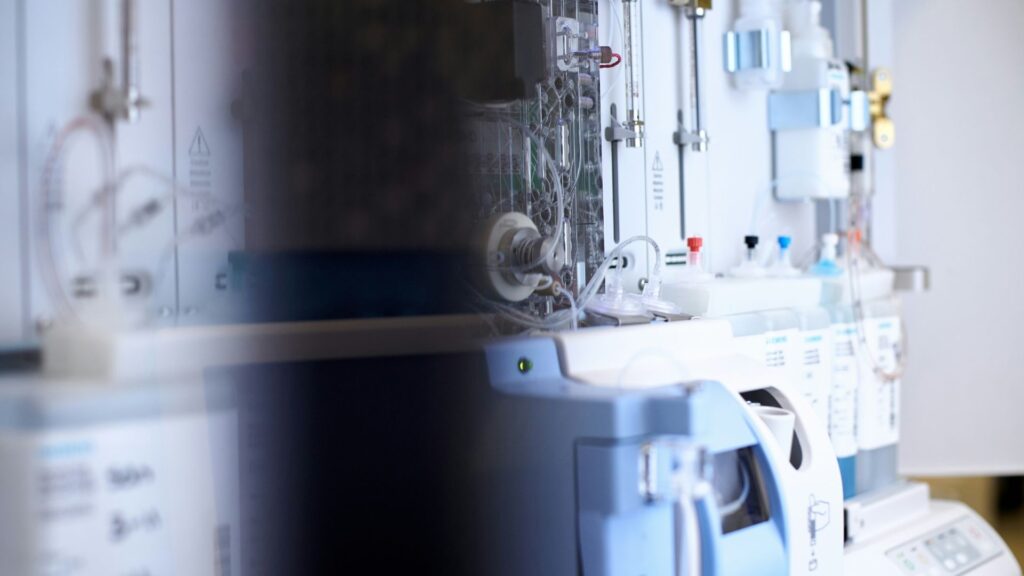
Medical manufacturing is the design, production, assembly, and quality control of products used in healthcare settings. It includes everything from surgical instruments and implantable devices to diagnostic equipment, injection molded components, sterile packaging, and single-use medical consumables.
Unlike many other industries, medical manufacturing operates under strict regulatory expectations, advanced material requirements, and zero-tolerance quality standards. Patient safety, product reliability, traceability, and compliance influence every stage of the process, from early product design through production validation and post-market monitoring.
For companies developing medical devices or healthcare-related components, choosing the right manufacturing partner is a critical decision. The process requires not only technical capability, but also documentation discipline, material expertise, and a quality-first production environment.
What Is Medical Manufacturing?
Medical manufacturing refers to the controlled production of products, devices, components, and assemblies used in healthcare, diagnostics, treatment, surgery, patient monitoring, and pharmaceutical or biotech applications.
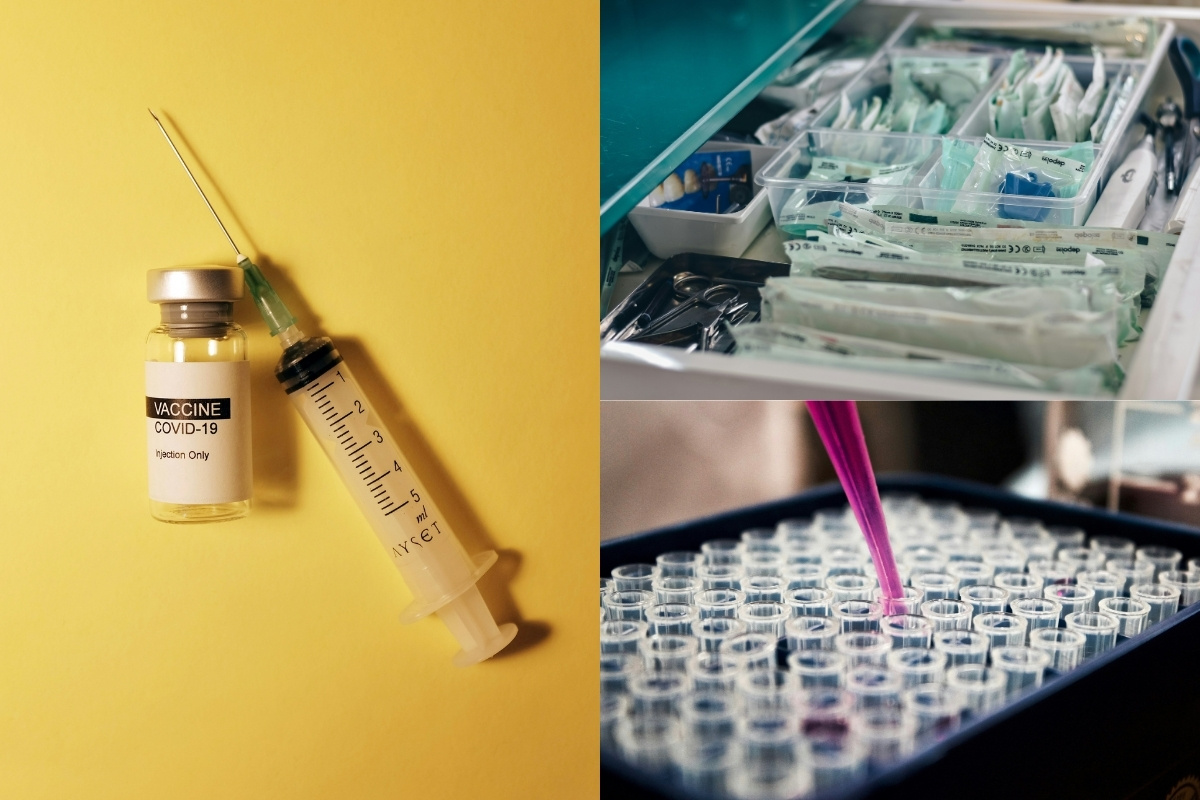
Medical manufacturing can include finished medical devices, molded plastic parts, machined components, electronic assemblies, sterile packaging, fluid handling systems, and disposable products. In many cases, the manufacturer must follow documented procedures for material control, inspection, lot traceability, equipment validation, and quality assurance.
In injection molding, medical manufacturing often involves producing high-precision plastic parts for housings, handles, caps, connectors, diagnostic equipment, drug delivery devices, surgical tools, and laboratory consumables.
Key Takeaway
Medical manufacturing is not just production. It is a controlled, documented, and quality-driven process designed to ensure that healthcare products are safe, repeatable, reliable, and appropriate for their intended use.
What Does Medical Manufacturing Include?
Medical manufacturing covers a wide range of product categories. The specific process depends on the device classification, material requirements, sterilization needs, production volume, and end-use environment.
Medical Devices
Medical devices include instruments, tools, machines, and products used to diagnose, monitor, treat, or support patients. Common examples include:
- Surgical tools such as scalpels, forceps, clamps, and handles
- Diagnostic equipment components used in imaging, testing, and monitoring systems
- Patient monitoring devices such as ECG equipment and blood pressure systems
- Disposable supplies such as syringes, catheters, IV components, caps, and connectors
Implantable Devices
Implantable devices require especially demanding material, biocompatibility, and quality controls because they are placed inside the body. Examples include:
- Orthopedic implants such as hip and knee replacement components
- Dental implants
- Pacemakers and related device components
- Stents and other cardiovascular devices
Components and Subassemblies
Many medical products depend on specialized components that are manufactured separately and assembled into a finished device. These may include:
- Precision machined parts
- Injection molded plastic housings and enclosures
- Electronic circuit boards and sensor assemblies
- Tubing, fittings, valves, and fluid control systems
- Medical-grade packaging components
Pharmaceutical and Biotech Manufacturing Support
Although pharmaceutical manufacturing is distinct from medical device manufacturing, the two often overlap through cleanroom production, sterile packaging, laboratory consumables, diagnostic components, and regulated quality systems.
Examples include molded parts used in testing kits, fluid handling systems, lab equipment, diagnostic cartridges, sample containers, and packaging used in drug delivery or biotech workflows.
The Medical Manufacturing Process
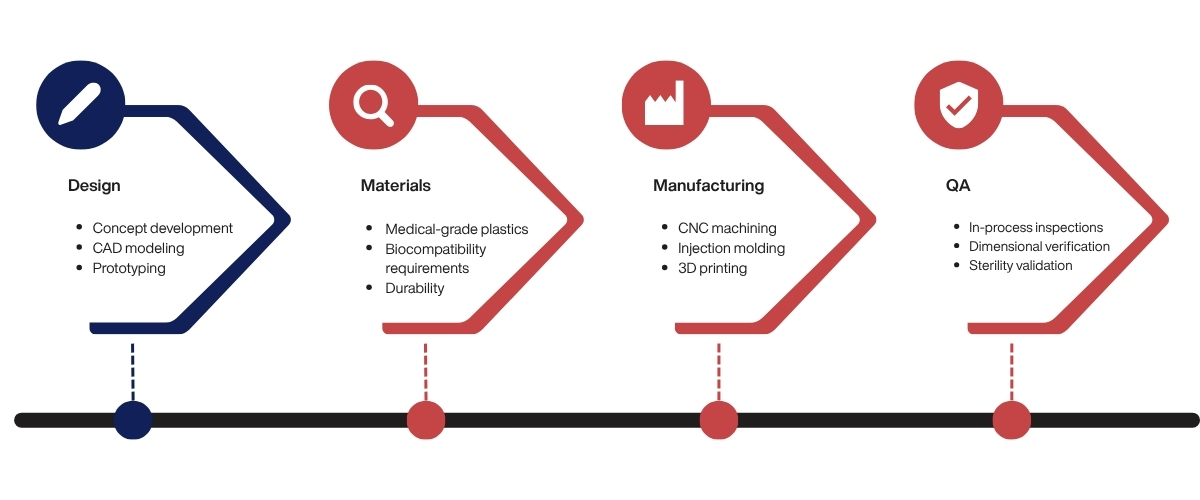
Medical manufacturing typically follows a structured process that includes product design, material selection, prototyping, validation, production, inspection, and documentation. Each stage must be carefully controlled to reduce risk and ensure consistent output.
1. Product Design and Engineering
The process begins with design and engineering. For medical products, design decisions must account for function, usability, manufacturability, material compatibility, cleaning or sterilization needs, regulatory expectations, and long-term reliability.
Common design and engineering steps include:
- Concept development
- CAD modeling
- Design for Manufacturability analysis
- Prototype development
- Material evaluation
- Design verification and validation
For injection molded medical components, the design phase should also consider wall thickness, ribs, draft angles, gate location, parting lines, material shrinkage, dimensional tolerances, and assembly requirements.
2. Material Selection
Material selection is one of the most important decisions in medical manufacturing. The material must support the product’s mechanical, chemical, thermal, and regulatory requirements.
Common medical manufacturing materials include:
- Medical-grade stainless steel
- Titanium for implantable and high-strength applications
- Medical-grade plastics such as polycarbonate, PEEK, polypropylene, polyethylene, and ABS
- Silicone and other elastomers
- Specialty resins used for sterilizable, biocompatible, or chemically resistant components
For plastic injection molded parts, the selected resin must be compatible with the application’s performance requirements. In many cases, medical parts must withstand sterilization, repeated handling, exposure to chemicals, dimensional requirements, and strict cosmetic or functional standards.
3. Prototyping and Validation
Before full-scale production, medical products often go through prototyping and validation. This helps confirm that the design can be manufactured consistently and that the part performs as intended.
Validation may include:
- Prototype molding or machining
- Dimensional inspection
- Functional testing
- Assembly testing
- Material performance testing
- Sterilization compatibility review
- Process capability studies
For molded medical components, validation helps identify potential risks before production tooling and high-volume manufacturing begin.
4. Manufacturing and Assembly
Medical manufacturing can involve multiple production methods depending on the product type, material, and required precision.
Common manufacturing techniques include:
- CNC machining: Used for precision components, metal parts, surgical instruments, and certain implantable products.
- Injection molding: Used for high-volume plastic parts such as housings, caps, connectors, handles, disposable components, and diagnostic device parts.
- Additive manufacturing: Used for rapid prototyping, patient-specific devices, and complex geometries.
- Cleanroom assembly: Used when contamination control is required for sterile, implantable, or sensitive products.
The right manufacturing process depends on geometry, tolerances, production volume, material requirements, and the product’s regulatory pathway.
Design Note
For medical injection molding projects, manufacturing planning should begin early in the design phase. Resin selection, wall thickness, gate location, tolerance expectations, and assembly requirements can all affect tooling cost, production repeatability, and long-term part performance.
Regulatory Standards in Medical Manufacturing

Medical manufacturing is heavily regulated because product failures can directly affect patient safety. Manufacturers must maintain strong quality systems, controlled documentation, traceability, inspection procedures, and risk management processes.
Key Regulatory Bodies and Frameworks
Depending on the market and product type, medical manufacturers may need to comply with requirements from organizations such as:
- FDA: The U.S. Food and Drug Administration regulates medical devices sold in the United States.
- ISO: The International Organization for Standardization publishes quality and risk management standards used throughout the medical industry.
- EMA: The European Medicines Agency is relevant for certain pharmaceutical, biotech, and combination-product environments.
Important Medical Manufacturing Standards
Important standards and regulatory frameworks may include:
- FDA 21 CFR Part 820: Quality system regulation for medical devices in the United States.
- ISO 13485: Quality management systems for medical devices.
- ISO 14971: Risk management for medical devices.
- GMP: Good Manufacturing Practices used to ensure consistent production and quality control.
Manufacturers may also need to maintain:
- Full material traceability
- Documented quality systems
- Process validation records
- Inspection and test records
- Risk management files
- Supplier controls
- Post-market surveillance systems when applicable
Why Quality Control Is Critical in Medical Manufacturing
Quality control is central to medical manufacturing because even small defects can create serious risks. A dimensional issue, material defect, contamination problem, assembly error, or documentation gap can affect product performance, regulatory approval, or patient safety.
Medical manufacturers commonly use quality assurance processes such as:
- Incoming material inspection
- Lot traceability
- In-process inspections
- Dimensional inspection
- Automated optical inspection
- Sterility validation when required
- Mechanical stress testing
- Biocompatibility testing when applicable
- Final inspection and release documentation
For injection molded medical components, quality control may include first article inspection, dimensional reporting, process monitoring, material certification review, and production lot documentation.
Quality assurance helps confirm that parts are not only manufactured correctly, but also repeatable across production runs.
Medical Injection Molding in Healthcare Manufacturing
Injection molding plays an important role in medical manufacturing because it can produce high-volume plastic components with repeatable dimensions, tight tolerances, and consistent material properties.
Medical injection molding is commonly used for:
- Device housings and enclosures
- Diagnostic equipment components
- Caps, closures, and connectors
- Handles and grips for medical tools
- Fluid management components
- Laboratory consumables
- Drug delivery device components
- Disposable medical products
Injection molding is especially valuable when a product requires repeatable production at scale. Once the mold, process, and material are validated, the process can produce consistent parts efficiently over high-volume runs.
However, medical injection molding requires careful attention to resin selection, mold design, production environment, inspection planning, and documentation.
Medical Molding Consideration
The best time to involve an injection molding partner is before tooling begins. Early manufacturing input can reduce design risk, prevent costly tooling changes, and improve the path from prototype to production.
Emerging Trends in Medical Manufacturing
Medical manufacturing continues to evolve as healthcare companies push for better performance, more customization, faster development timelines, and stronger production traceability.
Automation and Robotics
Automation can improve consistency, reduce handling, increase throughput, and lower contamination risk. Robotic assembly, automated inspection, and controlled part handling are increasingly common in medical manufacturing environments.
Smart Manufacturing and Industry 4.0
Smart manufacturing uses connected equipment, sensors, data collection, and real-time monitoring to improve process control. For medical manufacturers, this can support better traceability, predictive maintenance, process consistency, and quality documentation.
Custom and Patient-Specific Devices
Additive manufacturing and advanced digital design tools are making patient-specific implants, prosthetics, and surgical planning tools more accessible. While not every product requires customization, demand continues to grow in applications where individualized fit improves outcomes.
Sustainable Medical Manufacturing
Healthcare companies are increasingly evaluating recyclable materials, energy-efficient production, waste reduction, and packaging optimization. Sustainability must still be balanced with safety, sterility, regulatory compliance, and product performance.
Who Works in Medical Manufacturing?
Medical manufacturing relies on multidisciplinary teams that combine engineering, regulatory knowledge, production expertise, and quality assurance.
Common roles include:
- Biomedical engineers
- Mechanical engineers
- Manufacturing engineers
- Tooling engineers
- Quality assurance specialists
- Regulatory affairs professionals
- Cleanroom technicians
- Production operators
- Supply chain specialists
- Project managers
This industry blends engineering precision with healthcare responsibility. Every role contributes to the goal of producing safe, reliable, and compliant products for medical use.
Why Medical Manufacturing Matters
Medical manufacturing supports the products and technologies that healthcare professionals use every day. Without controlled manufacturing processes, even the most innovative medical technologies could not safely and reliably reach patients.
Medical manufacturing plays a critical role in:
- Improving patient outcomes
- Supporting minimally invasive procedures
- Enabling life-saving technologies
- Improving diagnostic accuracy
- Supporting global healthcare access
- Helping medical device companies bring products to market
The industry requires a higher level of compliance, documentation, and validation than many other manufacturing sectors. That is why medical device companies must carefully evaluate the experience, quality systems, and technical capabilities of their manufacturing partners.
Why Partner with Texas Injection Molding for Medical Projects?
Texas Injection Molding supports companies that need experienced engineering, tooling, and production support for demanding plastic injection molding projects. For medical and healthcare-related applications, the right manufacturing partner can help reduce risk, improve manufacturability, and support a smoother path from design to production.
Located in Houston, near the Texas Medical Center, Texas Injection Molding understands the urgency, precision, and collaboration required by healthcare and medical device companies.
Engineering and Material Expertise
Medical projects often involve engineering-grade resins, tight tolerances, functional requirements, and demanding production expectations. Texas Injection Molding brings practical experience in resin selection, part design review, tooling strategy, and production planning.
Regional Proximity for Texas Medical Companies
For Texas-based medical startups, healthcare companies, and established OEMs, regional proximity can make collaboration easier. Face-to-face engineering reviews, tooling discussions, and production planning can help accelerate decision-making and reduce communication gaps.
Risk Mitigation Through Better Manufacturing Planning
Medical manufacturing projects carry significant risk when design, tooling, material, and production decisions are not aligned early. A disciplined injection molding partner can help identify manufacturability issues before they become expensive production problems.
Frequently Asked Questions
What is medical manufacturing?
Medical manufacturing is the controlled production of medical devices, healthcare components, diagnostic equipment, surgical tools, laboratory products, and related parts used in patient care. It includes design, material selection, production, assembly, inspection, documentation, and quality control.
What products are made through medical manufacturing?
Medical manufacturing can produce surgical instruments, diagnostic equipment, implantable devices, disposable supplies, medical device housings, connectors, fluid handling components, laboratory consumables, packaging systems, and injection molded plastic parts used in healthcare applications.
Why is quality control important in medical manufacturing?
Quality control is important because medical product defects can affect patient safety, regulatory compliance, and device performance. Manufacturers use documented inspections, material traceability, process controls, testing, and validation to ensure that parts are produced consistently and meet required specifications.
What materials are used in medical manufacturing?
Common materials include stainless steel, titanium, silicone, elastomers, and medical-grade plastics such as polycarbonate, polypropylene, polyethylene, PEEK, ABS, and other engineering resins. The right material depends on strength, sterilization compatibility, chemical resistance, biocompatibility, dimensional stability, and cost requirements.
How is injection molding used in medical manufacturing?
Injection molding is used to produce repeatable plastic components for medical devices, diagnostic equipment, housings, caps, connectors, handles, disposable products, and laboratory consumables. It is especially useful for high-volume production where dimensional consistency and repeatability are important.
When should a medical device company involve an injection molding partner?
A medical device company should involve an injection molding partner as early as possible, ideally before tooling begins. Early input can help improve material selection, part design, moldability, tolerance planning, assembly strategy, and production repeatability.
Related Guides
- Medical and Pharmaceutical Injection Molding
- What Is Injection Molding?
- Design for Manufacturability (DFM) in Injection Molding
- Injection Molding Material Selection Guide
- New Project Information
Start Your Medical Manufacturing Project
Navigating medical-grade production requires a partner who understands the stakes. Texas Injection Molding can support medical and healthcare-related plastic injection molding projects with engineering input, tooling expertise, material guidance, and production support.
Call us at 281-489-4292 or visit our Contact Page to discuss your medical device design and how we can support your path to production.