
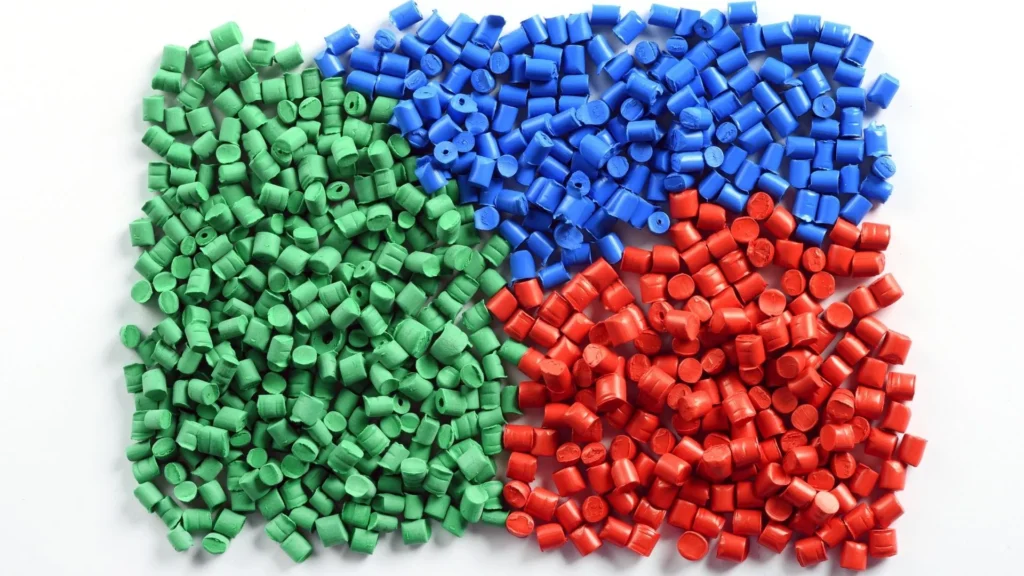
Material selection is the most consequential design decision in injection molding. The wrong material produces a part that fails in service, absorbs moisture and loses its dimensions, cracks under chemical exposure, or costs twice what was budgeted. The right material does the opposite: it makes the design work, the tooling straightforward, and the production consistent.
This guide provides a systematic framework for narrowing from hundreds of candidate resins to the specific grade that fits your application.
Start with the Application Requirements
Before reviewing a material data sheet, map out what the part must do. Answer these questions clearly:
Mechanical Loading
What loads will the part carry — tensile, compressive, impact, fatigue, creep? A bushing carrying a rotating shaft needs different properties than a housing that just needs to hold its shape. High tensile loads favor nylon or PC; impact loading favors ABS or TPU; fatigue resistance favors POM, or Delrin; creep resistance under sustained load favors glass-filled materials.
Thermal Environment
What temperatures will the part see in service — peak, sustained, and cyclic? Parts that see 80°C continuously eliminate PP and standard ABS from consideration. Parts near engine heat or in sterilization cycles require high-performance materials like PEEK, PEI, or PPS. Know the heat deflection temperature, or HDT, and continuous service temperature of any candidate material, not just its peak rating.
Chemical Exposure
What fluids, solvents, or cleaning agents will the part contact? PC cracks in contact with aromatic solvents; Delrin is attacked by strong acids; PP is resistant to most chemicals but softens in aromatic hydrocarbons. Request chemical resistance data for specific agents, not generic categories.
Regulatory Requirements
Is the part in a food-contact, medical, potable water, or flammability-rated application? FDA compliance, USP Class VI, UL 94 flame ratings, NSF 61, and RoHS restrictions all constrain the available resin selection before mechanical considerations begin.
Dimensional Stability
How tight are the dimensional tolerances, and will the part be exposed to humidity? Nylon absorbs moisture and swells dimensionally, which can be unacceptable for tight-tolerance fits. PC, ABS, and Delrin offer better dimensional stability in humid environments. Glass-filled grades reduce shrinkage variability and improve tolerance control.
A Practical Selection Framework
The best injection molding material depends on the part’s mechanical requirements, operating temperature, chemical exposure, regulatory requirements, dimensional stability needs, and cost target. Use the framework below to narrow the material family before selecting a specific resin grade.
| Application Need | Common Material Options |
|---|---|
| Structural, high-temp, wear | PA 6/6 GF30, PEEK, PEI, PPS — engineering and high-performance families |
| Structural, moderate-temp | PA 6/6, PA 6, PC, ABS/PC — the standard engineering thermoplastic tier |
| Appearance, dimensional | ABS, PC, PC/ABS — good surface finish, stable dimensions, easy to finish |
| Chemical resistance, food-safe | PP, HDPE, POM, or Delrin — resists most chemicals, FDA grades available |
| Flexible, elastomeric | TPE, TPU, LSR — soft-touch, sealing, overmold, flexible parts |
| Transparent / optical | PC, PMMA, or acrylic, SAN, TPU — light transmission in decreasing order of toughness |
| Flame-rated electrical | PA 6/6 FR, ABS FR, PBT FR, PPS — UL 94 V-0 grades across the stiffness range |
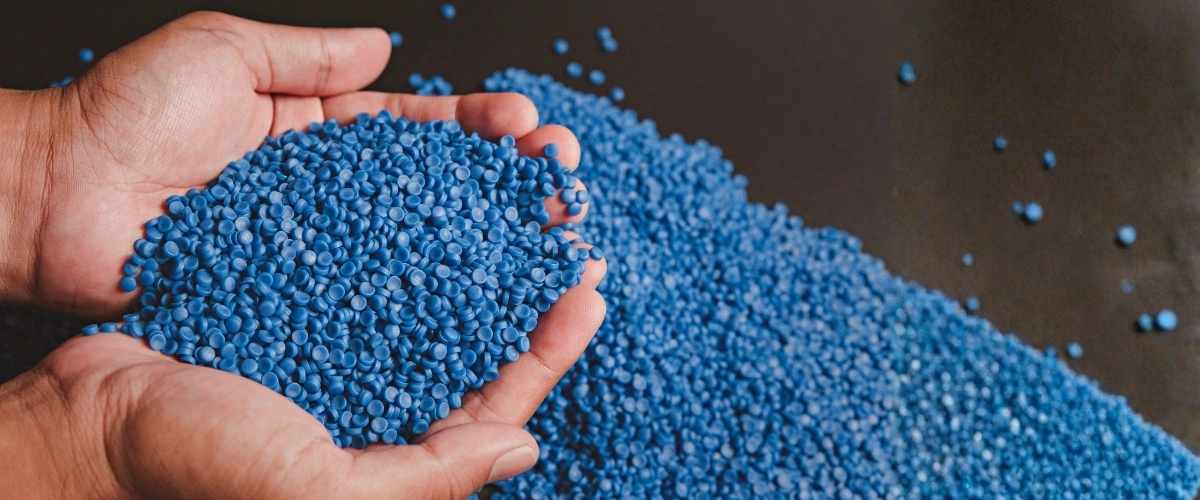
Material selection affects shrinkage, gate design, mold temperature, tool steel, and venting requirements before production begins.
The Role of Mold Design in Material Selection
Material selection and mold design are not independent. The chosen material determines several important tooling and processing requirements:
- Mold shrinkage: Semi-crystalline materials, including PP, nylon, and POM, shrink more than amorphous materials such as ABS, PC, and PMMA. This requires different mold cavity dimensions.
- Gate size: Low-viscosity materials, including nylon and PP, can use smaller gates. High-viscosity materials, including PC and PEEK, need larger gates and runners.
- Mold temperature: High-performance materials require heated molds, often in the 80–140°C range, which adds mold complexity and energy cost.
- Tool steel: Glass-filled and carbon-fiber-filled grades require harder tool steels to resist abrasive wear.
- Venting: Materials that generate volatile gases during processing, including PVC, POM, and nylon, require more aggressive venting to prevent gas traps and surface defects.
Design Note
Material selection should happen before mold design is finalized. Shrinkage, viscosity, mold temperature, filler content, venting requirements, and tool steel selection can all affect tooling decisions, dimensional planning, and long-term production consistency.
Frequently Asked Questions
What is the most common injection molding material?
Polypropylene, or PP, is the most produced injection molding material globally by volume, primarily due to its low cost, chemical resistance, and use in high-volume packaging and consumer goods. For engineering applications requiring structural performance, ABS and nylon, or PA 6/6, are the most common. For high-performance applications, PC, POM, and glass-filled nylon are widely specified.
How do I know if a material will survive my application temperature?
Check the heat deflection temperature, or HDT, at 1.8 MPa and the continuous use temperature rating on the datasheet. HDT tells you the temperature at which the material softens under load, so parts should operate well below it. Continuous use temperature tells you how long the material can sustain exposure without degrading. For safety margins, target material ratings at least 20°C above the maximum expected service temperature.
Do I need a specific material for medical device applications?
Medical device materials must meet biocompatibility standards appropriate to the contact type and duration, typically USP Class VI, ISO 10993, or FDA food-contact compliance depending on the application. Common medical-grade injection molding materials include PC, ABS, PP, PEEK, and LSR. Material selection must be validated with the device’s regulatory pathway in mind from the beginning.